
Khan El Khalili Bazaar Guide: Walking Islamic Cairo in Order
By Panda Travel Egypt Published Reviewed by Ahmed Abdelmawgoud 8 min read
A local operator's walking order through Islamic Cairo: Al Muizz Street, its mosques and madrasas, and Khan El Khalili bazaar at the end, with realistic timings.
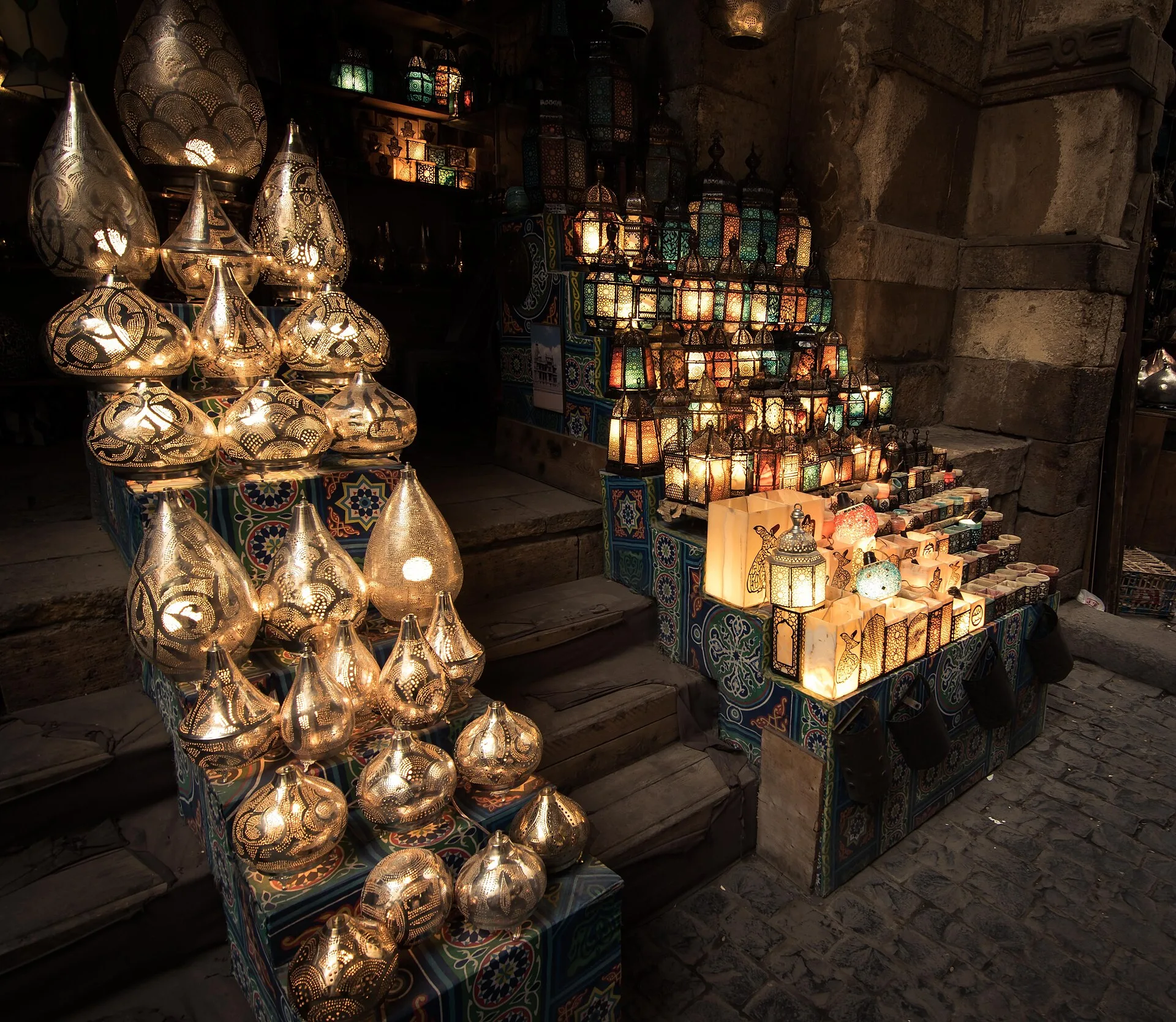
Walk Islamic Cairo from Bab al-Futuh down Al Muizz Street, calling at the Qalawun complex, the Madrasa of Barquq and Bab Zuwayla, then finish at Khan El Khalili bazaar. Reach Bayn al-Qasrayn's monuments well before their 4 pm closing, avoid Friday and Saturday mornings for the quietest walk, and dress modestly for the mosques.
Most visitors treat Khan El Khalili bazaar as one stop bolted onto a Cairo day tour, a quick walk through stalls before the coach moves on. This Khan El Khalili bazaar guide takes a different approach: it starts at the old city gate of Bab al-Futuh, follows Al Muizz Street south through the mosques and madrasas that line it, and ends at the bazaar itself, with the dress notes and crowd patterns that matter on the day.
Walked in that order, Islamic Cairo stops being a list of names and becomes a single, legible route. Al Muizz Street runs between two gates of the old city wall, Bab al-Futuh in the north and Bab Zuwayla in the south, and Khan El Khalili sits close to its southern half, near Al-Hussein Mosque and Al-Azhar. Starting at the gate and walking toward the bazaar means the shopping happens last, when legs are tired and a seat for tea is welcome, rather than first, when the mosques still need full attention.
Why Al Muizz Street comes before this Khan El Khalili bazaar guide's final stop
Al Muizz Street takes its name from the Fatimid caliph al-Muizz li-Din Allah, who ruled Egypt from 969 to 975, and it is often described as the largest open-air museum of Islamic monuments anywhere. It forms part of Historic Cairo, inscribed as a UNESCO World Heritage Site in 1979, and it passes Khan El Khalili and the Al-Ghuriya area on its way south.
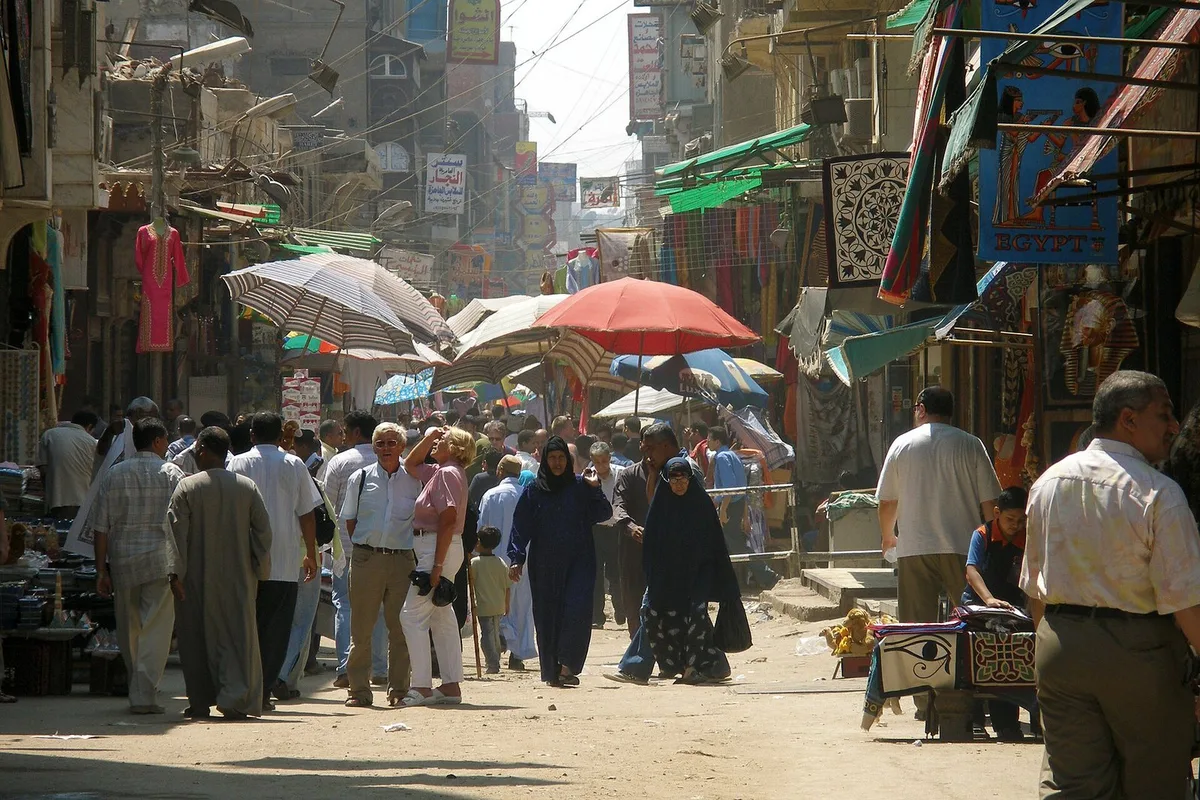
The street is generally listed as open daily from 9 am to 5 pm, though this can vary, and a handful of its key buildings close earlier. Walking from north to south uses that structure well: the mosques and madrasas, which keep the earlier closing times, come first, and the bazaar, which stays open into the evening, comes last.
Starting at Bab al-Futuh and reaching Bayn al-Qasrayn
Bab al-Futuh, one of the surviving gates of the Fatimid city wall, is the natural starting point for an Islamic Cairo walking tour. From there, Al Muizz Street runs south past a run of minarets and carved stone facades before reaching Bayn al-Qasrayn, the stretch where three Mamluk monuments stand side by side: the Qalawun complex, the Madrasa of al-Nasir Muhammad and the Mosque-Madrasa of Barquq.
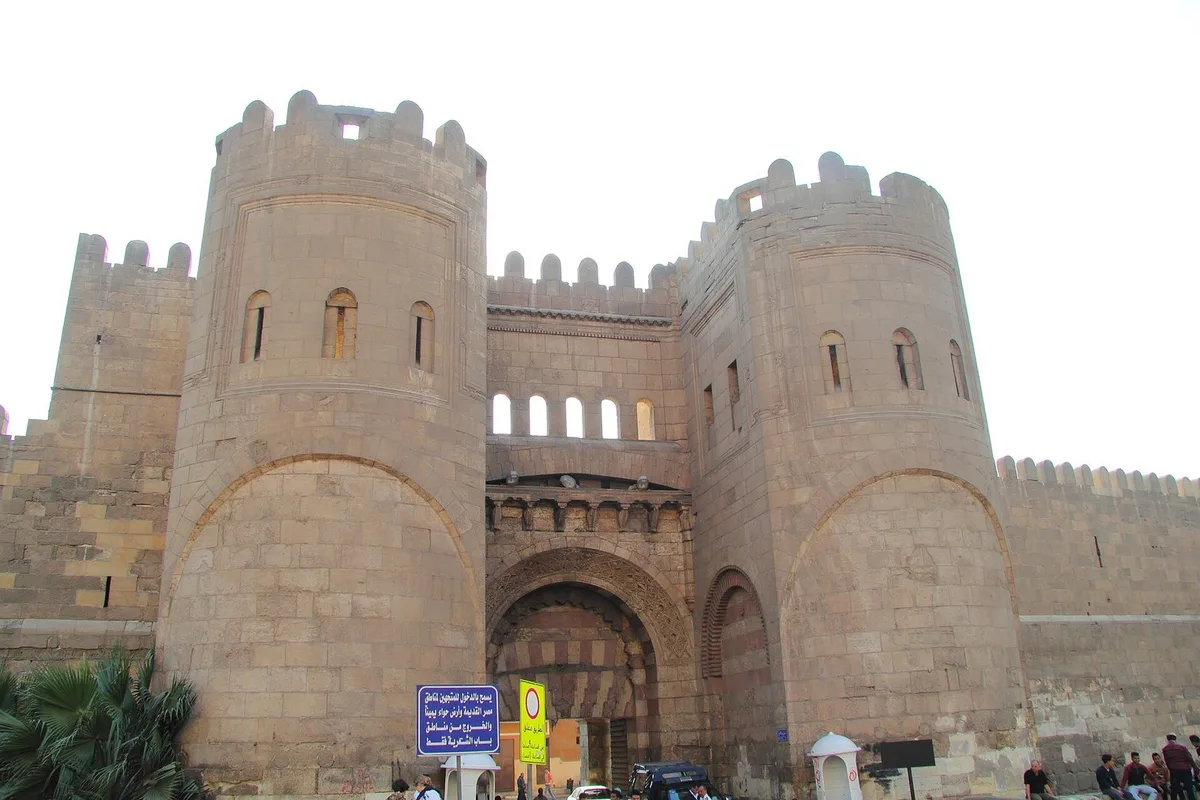
The Qalawun complex combines a madrasa, a mausoleum and a bimaristan, a historic hospital, built in 1284-85 under Sultan al-Mansur Qalawun. Together with its neighbours it forms one of the densest concentrations of Mamluk architecture anywhere in Cairo.
These three buildings, along with several others on Al Muizz Street, are listed as open 9 am to 4 pm, an hour earlier than the street's own 5 pm closing, and this can vary. Reach Bayn al-Qasrayn well before 4 pm, in other words soon after you start, rather than saving it for the end of a slow morning.
An area ticket for Al Muizz Street covers the Qalawun complex itself, the Madrasa of al-Nasir Muhammad, the Madrasa of Barquq, the Sabil of Sulayman Agha al-Silahdar, the Madrasa of al-Kamil, the Musa bin Maimun synagogue, Hammam Inal and Bashtak Palace. Bayt al-Suhaymi, the Sultan al-Ghuri complex and Bab Zuwayla itself are ticketed separately, so budget a little extra time and planning if you want to go inside all three.
Continuing south: Al-Ghuriya to Bab Zuwayla
South of Bayn al-Qasrayn, the street narrows and opens onto the Sultan al-Ghuri complex, dating to 1503. A little further on, the Mosque of Al-Ashraf Barsbay dates to 1424, and the Mosque of al-Muayyad, built in 1421, stands beside Bab Zuwayla, the southern gate of the old city.
Bab Zuwayla is ticketed separately from the main area pass. Its minarets are a natural point to pause before turning back north toward Khan El Khalili.
Khan El Khalili bazaar: what it actually is, and where to end the walk
Khan El Khalili began as a single caravanserai, a trading building where merchants stored and sold goods, built by the Mamluk emir Jaharkas al-Khalili, commonly dated to between 1382 and 1389, on the site of an older Fatimid tomb known as the Saffron Tomb. The name has since spread to cover the whole surrounding district of lanes and shopfronts, which lies between Al-Hussein Mosque and Al-Azhar, close to the southern end of Al Muizz Street.
Shop hours vary stall by stall, but the bazaar is generally reported to run from around 9:30 or 10 am until late evening, often towards 11 pm or midnight. Arriving here after the mosques and madrasas means wandering the alleys with no further timed stop ahead, which makes the pace far more relaxed.
A traditional Egyptian coffeehouse near Al-Hussein Mosque is the usual place to rest with a mint tea or Turkish coffee before heading back to the hotel. Khan El Khalili also sits close enough to Al-Azhar Mosque, free to enter and generally closed only around Friday midday prayer, to add a short stop there if time allows.
When to visit, and when to avoid the crowds
Friday and Saturday mornings bring the heaviest local footfall to Al Muizz Street, with school groups and local families filling the pavement in front of the main monuments. Friday midday prayer also closes mosques for around two hours, which can stall a tightly timed walk right in the middle of the day. Choosing a different day for the walk sidesteps both, keeping Bayn al-Qasrayn's monuments open and the pavements easier to move through.
What to wear for the mosques
Modest dress is required at the mosques on this route, Al-Azhar included, and at Sultan Hassan Mosque on its own day, and a scarf is worth carrying in case you want to cover your hair inside a prayer hall.
Shoes come off before entering any mosque interior, so slip-on shoes save a good deal of time over a morning with several stops. Comfortable, closed walking shoes matter just as much for the street itself over a long morning on foot.
Sultan Hassan Mosque: a different afternoon, not an add-on
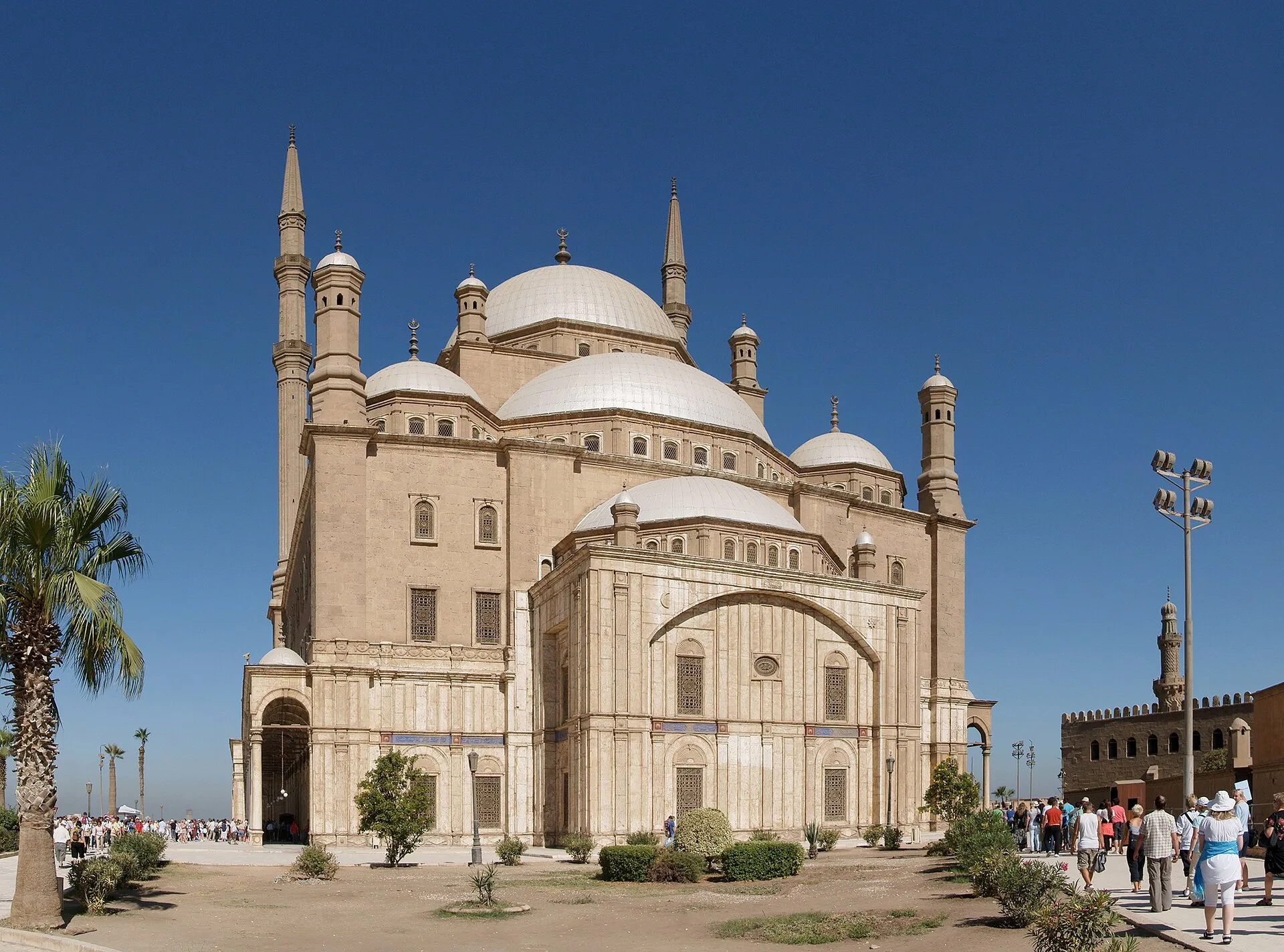
Sultan Hassan Mosque, built between 1356 and 1363, stands in Salah al-Din Square directly opposite the Citadel, a different part of Islamic Cairo from Al Muizz Street. It was designed to house four madrasas, one for each of the four Sunni schools of law, and its entrance hall and central courtyard are among the most striking Mamluk interiors in the city.
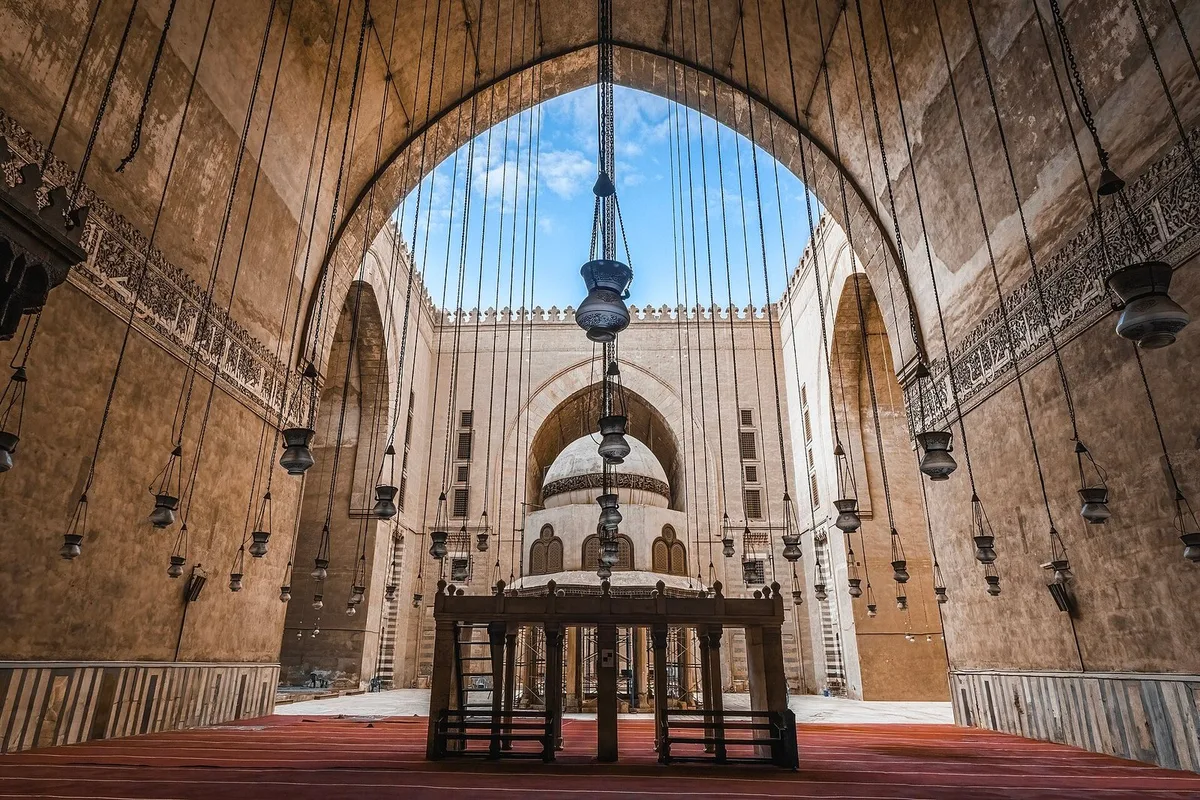
Its official ticketing shows entry from 9 am with last entry in the mid afternoon, though other sources give slightly different hours, so this is worth checking on the day. Because it sits below the Citadel rather than on Al Muizz Street, it suits its own morning followed by the Citadel in the afternoon, rather than being squeezed onto the end of the Khan El Khalili walk.
Fitting Islamic Cairo around a Pyramids day
The Giza Pyramids, the Sphinx and, for many travellers, the Grand Egyptian Museum already fill a full day on the western side of Cairo. Islamic Cairo sits on the opposite, eastern side of the city, and trying to cover both in one day usually means rushing one of them.
Most itineraries give each its own day instead. Islamic Cairo pairs naturally with a walk through the Old Cairo Coptic Quarter or with the Citadel and Sultan Hassan Mosque, while the plateau and museum stay a separate day on their own. The Discover Cairo Like Never Before programme that Panda Travel Egypt runs from Cairo follows that split: the Pyramids, Sphinx and Grand Egyptian Museum on one day, and its Old Cairo and Citadel tour on another. Travellers who want this walk on top of that can ask our Egypt tour operator team about extending the stay.
Planning the walk as part of a longer stay
A single Islamic Cairo walking tour, from Bab al-Futuh to Khan El Khalili bazaar with stops along Al Muizz Street, sits well alongside a visit to the Citadel, Old Cairo or simply some rest before an evening out, depending on how the rest of the day is built.
Anyone building a longer Cairo stay around this route is better served by our wider guide to things to do in Cairo, which sets out how to group the city's sights by location rather than by subject, and this Khan El Khalili bazaar guide can be added as an extra day to any of our Cairo short breaks, alongside the Pyramids and the museum.
Booking a guide for this route through Panda Travel Egypt, a Cairo-based Egypt tour operator, means someone who knows which mosques close early and which days to avoid plans the order for you, leaving the walk itself free of surprises.
A note on comfort on the day
Bring water and a hat for the open stretches of Al Muizz Street, especially in the warmer months, and flat, closed shoes make the walking easier than anything open-toed.
If the itinerary allows, build in a loose half hour of slack before Khan El Khalili. The bazaar rewards unhurried browsing far more than it rewards being checked off a list, and arriving there with nowhere else to be is the whole point of putting it last.
Sources
Plan Discover Cairo Like Never Before
Tell us your dates and who is travelling. We reply with the programme day by day, and its price.
Frequently asked
How long do you need for Khan El Khalili and Islamic Cairo?
Walking Al Muizz Street with stops at the main mosques and madrasas, then reaching Khan El Khalili itself, forms a full outing on foot. Build the day around reaching Bayn al-Qasrayn's monuments well before their 4 pm closing and leaving the bazaar, which stays open later, for the end, giving more time if you plan to sit for tea or browse the shops closely.
What is the best order to walk Islamic Cairo?
Start at Bab al-Futuh in the north and walk south down Al Muizz Street, taking in the Qalawun complex, the Madrasa of Barquq and the Mosque of al-Muayyad near Bab Zuwayla, then loop back up to finish at Khan El Khalili bazaar, which sits close to Al-Hussein Mosque.
What should you wear to visit the mosques in Islamic Cairo?
Modest dress is required at the mosques, and it helps to bring a scarf in case you want to cover your hair. Shoes come off before entering mosque prayer halls, so slip-on shoes save time, and comfortable walking shoes make the day easier.
When should you visit to avoid the crowds?
Friday and Saturday mornings bring the heaviest local footfall, with school groups and families filling the street in front of the main monuments, and Friday midday prayers close mosques for around two hours. A different-day visit avoids both.
Can you combine Khan El Khalili with a Pyramids day?
It is better not to. The Pyramids, the Sphinx and often the Grand Egyptian Museum already fill a full day on their own, and Islamic Cairo sits on the opposite side of the city. Most travellers give Islamic Cairo its own day alongside Old Cairo or the Citadel.
Is Khan El Khalili only for shopping?
No. The bazaar grew up around a Fatimid tomb site and a Mamluk caravanserai, and it sits beside Al-Hussein Mosque and close to Al-Azhar Mosque, so it works as a historic stop at the end of an Islamic Cairo walk as much as a place to browse stalls.
Places in this article
Tours for this trip


Where to stay
Read next
- Old Cairo Coptic Quarter: A Walking Order That Actually Works A sight-by-sight walking order for the Old Cairo Coptic Quarter, how long it really takes on foot, and how it
- Saqqara and Dahshur: A Local Operator's Day Trip Order A local operator's order of visits for Saqqara and Dahshur, with realistic timings, drive distances and what t
- Grand Egyptian Museum Tickets and Tips: A Visit Plan That Works A practical plan for Grand Egyptian Museum tickets, gallery order, timing and how it fits with a Giza pyramids
- Giza Pyramids Sunset Tour: When the Timing Actually Works Does a Giza pyramids sunset tour actually work? Here's the honest timing: when the plateau closes, when the su