Saint Catherine is a small town set high in the mountains of the southern Sinai Peninsula, built around one of the oldest working monasteries in the world and the mountain where, by tradition, Moses received the Ten Commandments. For most travellers, things to do in Saint Catherine Egypt come down to two experiences that complement each other well: a quiet daytime visit to Saint Catherine Monastery, and a night-time climb of Mount Sinai that ends with sunrise over a landscape of bare granite peaks. Together they make a short but complete trip, and the town's altitude and setting give it a different character to anywhere else in Egypt, cooler, quieter, and built around rock rather than river or sea.
Things to do in Saint Catherine Egypt: the monastery and its museum
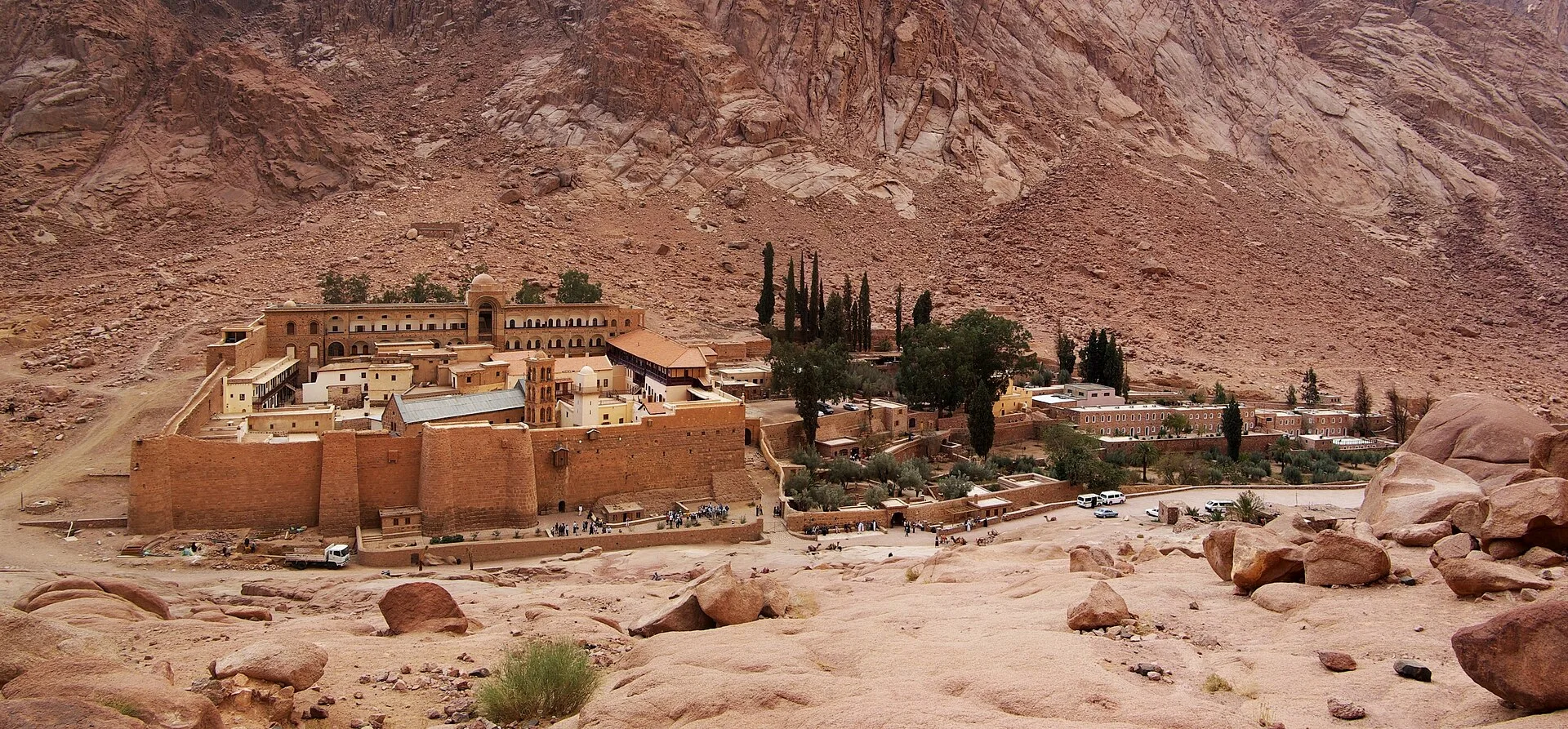
Saint Catherine Monastery was built in the 6th century under the Byzantine emperor Justinian, at the foot of the mountain traditionally identified as the biblical Mount Sinai. It is still home to a small community of monks and holds one of the most significant collections of early Christian icons, manuscripts and religious art anywhere in the world, much of it never moved from the site. A visit usually takes around 1 to 1.5 hours and covers the fortified outer walls, the basilica, and the site traditionally associated with the Burning Bush, now a bush growing against the monastery wall.
The monastery's museum, the Sacred Sacristy, displays a selection of its icons and manuscripts and is worth the extra half hour if it is open on the day of your visit. Because the monastery is a working religious site rather than a tourist attraction, modest dress is expected: shoulders and knees covered for both men and women, and a reasonably quiet manner inside the walls.
Outside the walls, a short walk around the base of the monastery gives a sense of the surrounding mountains without committing to the full climb. The small settlement here, home to Bedouin families and monastery staff, has a scattering of cafes and simple shops selling bread, dried fruit and handwoven items, worth a slow half hour if your schedule allows it.
The Mount Sinai sunrise hike: two routes, real timings
Climbing Mount Sinai for sunrise is the reason most visitors come. There are two established routes to the summit, and they suit different travellers.
- The Steps of Repentance: a direct stone staircase of roughly 3,750 steps cut into the mountain by monks. It takes about 2 to 3 hours up and a similar time coming down. It is steep and uneven underfoot, better suited to hikers who are reasonably fit and comfortable on stairs in the dark.
- The camel path: a longer, more gradual route that winds around the mountain rather than straight up it. It takes around 2.5 to 3.5 hours on foot, and much of it can be covered on a hired camel, with the final several hundred steps to the summit walked by everyone regardless of route.
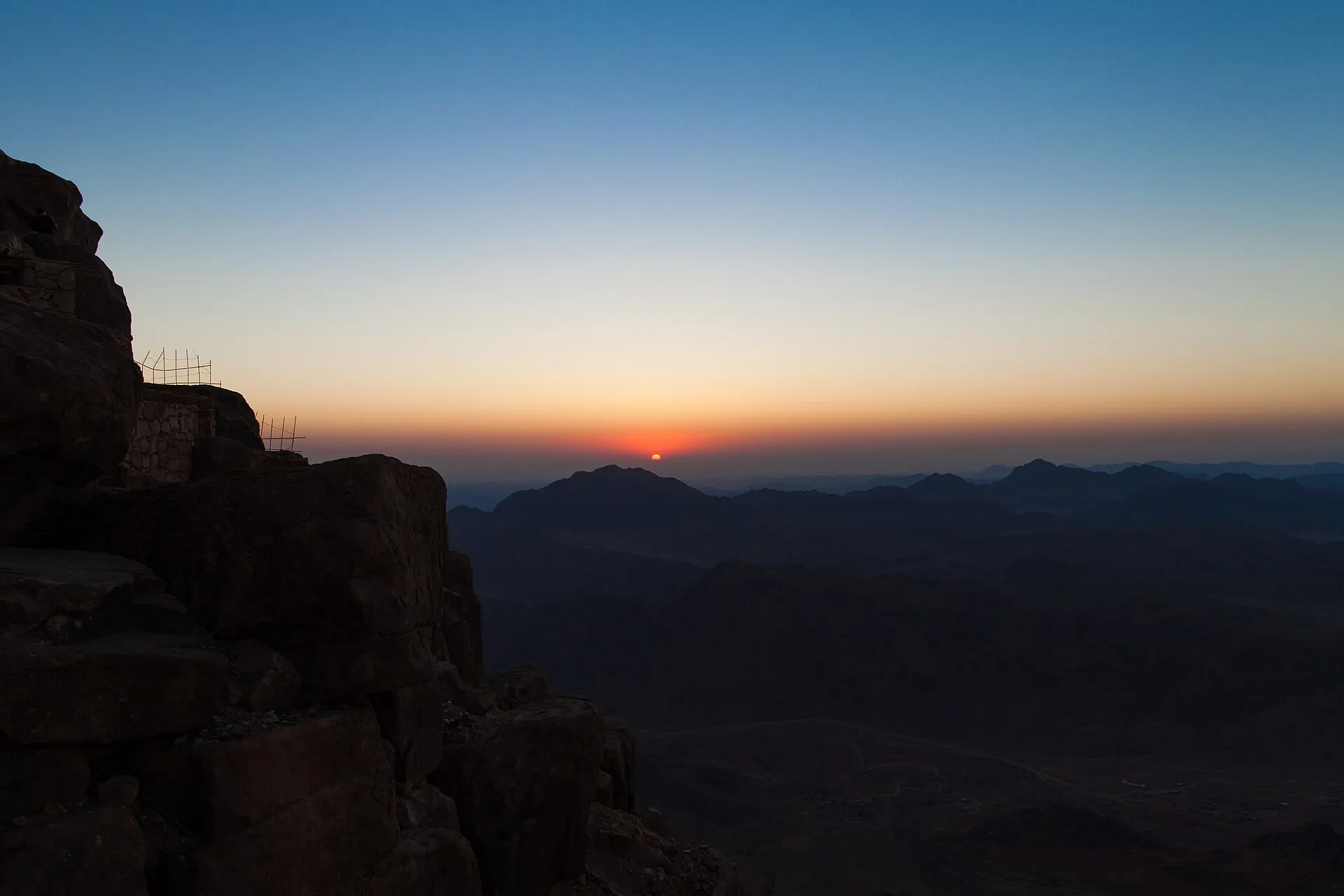
Most groups start walking at around 2 am, or leave Sharm or Dahab by road late the evening before so as to reach the 2,285-metre summit well before first light, then wait, often alongside dozens of other walkers, for the sky to colour over the surrounding peaks. The descent, done in daylight, gives a much clearer sense of the terrain than the climb up, with views back over the monastery and the dry valleys that fan out from the base of the mountain. A local Bedouin guide is required for the night climb and can usually be arranged on arrival in town, though booking this as part of an organised trip removes the guesswork.
Partway up, at a small plateau roughly two thirds of the way to the top, both routes converge and most groups pause here before tackling the final steep section. A handful of simple stalls sell tea, biscuits and blankets through the night, which is useful if the cold catches you out. Whichever route you take, come prepared: a head torch, sturdy closed shoes, and layers that can be added or removed as the temperature swings sharply between the base and the summit.
How many days to give Saint Catherine
One night is enough for the core experience. A typical pattern is to arrive in the afternoon or early evening, rest for a few hours, then set off for the overnight Mount Sinai climb, returning to town by mid-morning. The monastery opens only in the morning and is usually closed on Fridays, Sundays and Orthodox holidays, so most visitors see it after the descent.
Travellers who want a slower pace, or who are combining Saint Catherine with time on Sinai's east coast, sometimes add a second night to recover before moving on to Dahab or Sharm El Sheikh. There is little reason to stay longer than two nights unless you plan additional hiking in the surrounding mountains, which is possible with local guides but is a specialist trip rather than a standard sightseeing stop. Keen walkers sometimes use a second day for the longer, full-day hike up Mount Catherine, Egypt's highest peak, or to one of the quieter wadis near the town, though both need their own Bedouin guide and more advance planning than the Mount Sinai climb.
Best time of year for the climb and the high passes
Saint Catherine's elevation, at around 1,600 metres, with the summit of Mount Sinai reaching about 2,285 metres, means conditions here differ noticeably from the rest of Egypt. Spring (March to May) and autumn (September to November) bring the most comfortable combination of mild days and manageable nights, which makes the overnight climb far more pleasant. Our season-by-season guide to the best time to visit Egypt covers how this fits with the rest of the country's climate.
Summer days can be hot by mid-morning, though the climb itself happens overnight and before sunrise, so it remains manageable with an early start and enough water. Winter is the one season that needs real preparation: nights on the mountain regularly drop below freezing, and a thin jacket is not enough. Some winters bring a dusting of snow to the upper slopes, which makes the steps slippery and the descent slower than usual. Whatever the month, bring warmer layers than you think you will need, since the summit at night is a different climate altogether from the valley floor.
Getting to Saint Catherine from Cairo, Dahab or Sharm El Sheikh
Saint Catherine's small airport has little or no scheduled service, so in practice every visit arrives by road. From Cairo, the drive crosses the Suez Canal and the length of the Sinai Peninsula, a long day's journey that most travellers prefer to cover as part of an organised tour rather than a self-drive trip. From Dahab the drive takes about 1.5 to 2 hours, and from Sharm El Sheikh about 3 hours, which makes either town a practical base before or after the climb.
Dahab in particular works well as a stopover, with a relaxed pace that suits travellers resting up after a night without much sleep on the mountain. The Retac Qunay Dahab Resort & Spa, a 5-star property on the edge of town, is a comfortable option for a night either side of the Saint Catherine trip.
Where to stay in Saint Catherine
Accommodation in Saint Catherine itself is simple and geared towards early starts and late returns rather than resort comfort, which suits the purpose of the trip. Most visitors treat the town as a base for one night only, built entirely around the timing of the climb: arrive, rest, climb, descend, move on. Travellers wanting more comfort before or after the climb are better served basing themselves in Dahab or Sharm El Sheikh, both within easy striking distance of the mountain, and both with a wider range of hotels.
Saint Catherine Egypt tours that include the monastery and the climb
Because of the distances involved, Saint Catherine is usually visited as part of a wider Sinai or spiritual-themed itinerary rather than on its own. Panda Travel Egypt runs the Mystic Egypt: A Spiritual Retreat programme, a six-day journey combining sunrise meditation at the Pyramids, the Mount Sinai climb and a Bedouin dinner in St. Catherine, and a visit to Philae Temple and a Nubian village in Aswan, built for travellers drawn to Egypt's quieter, more reflective side. It sits within our wider Spiritual & Wellness tour collection, which groups together the handful of programmes built around temples, the desert and unhurried pacing rather than a packed sightseeing schedule.
For travellers building their own route through Egypt and wanting to see how a Saint Catherine detour fits alongside Cairo, Luxor or the Nile, our Luxor travel guide and the full list of Egypt tour packages are useful starting points for working out the rest of the trip.