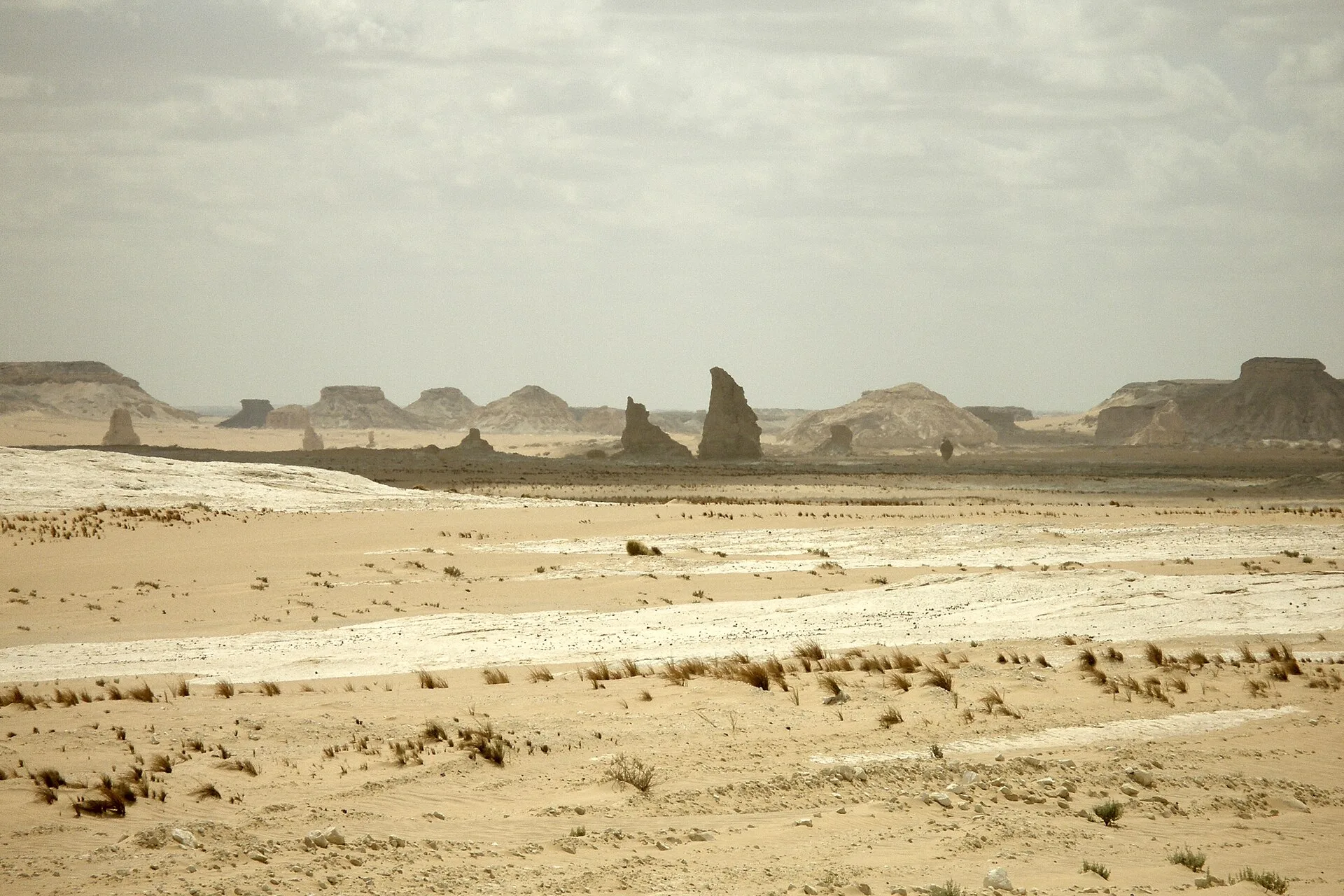
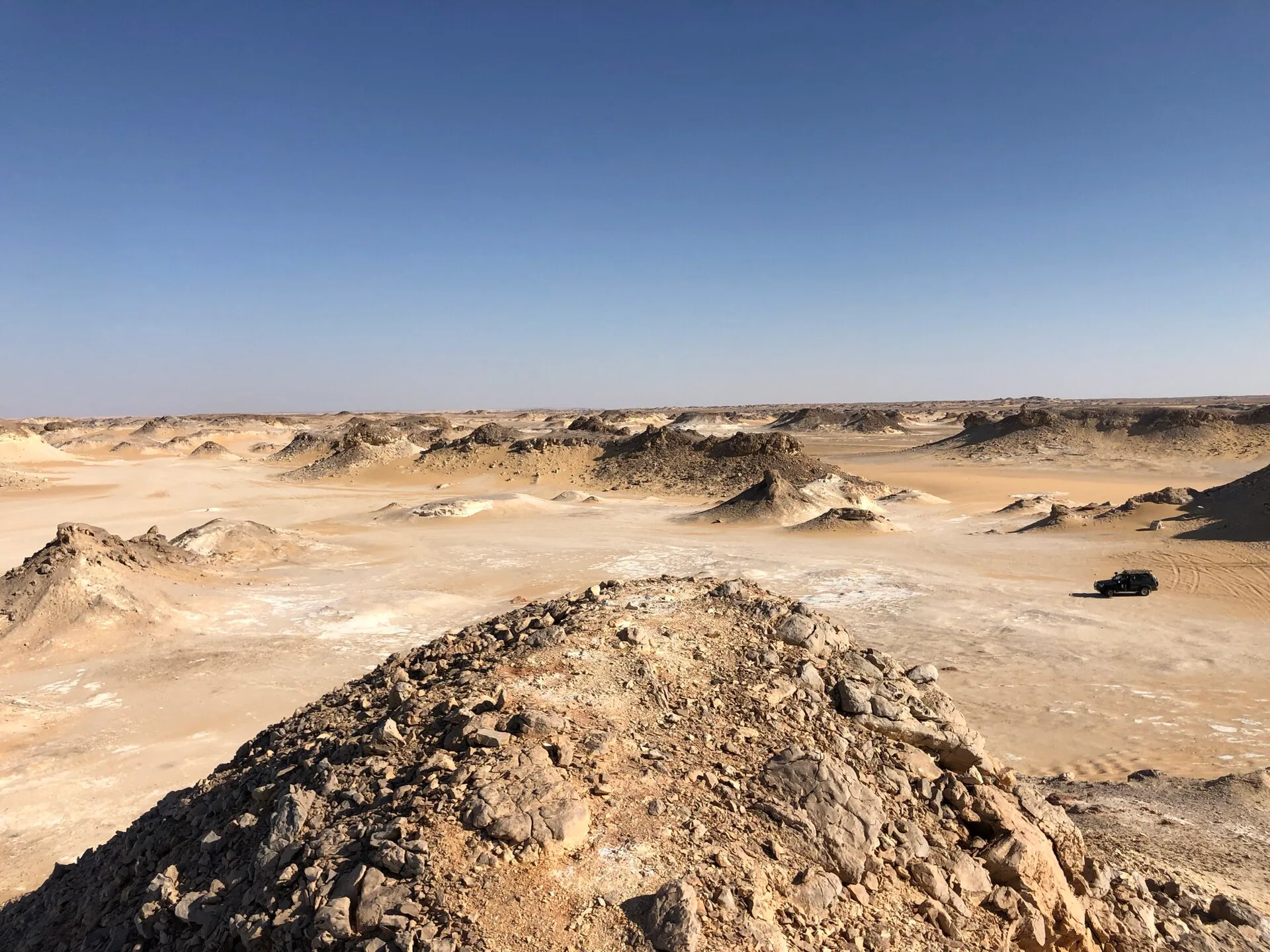
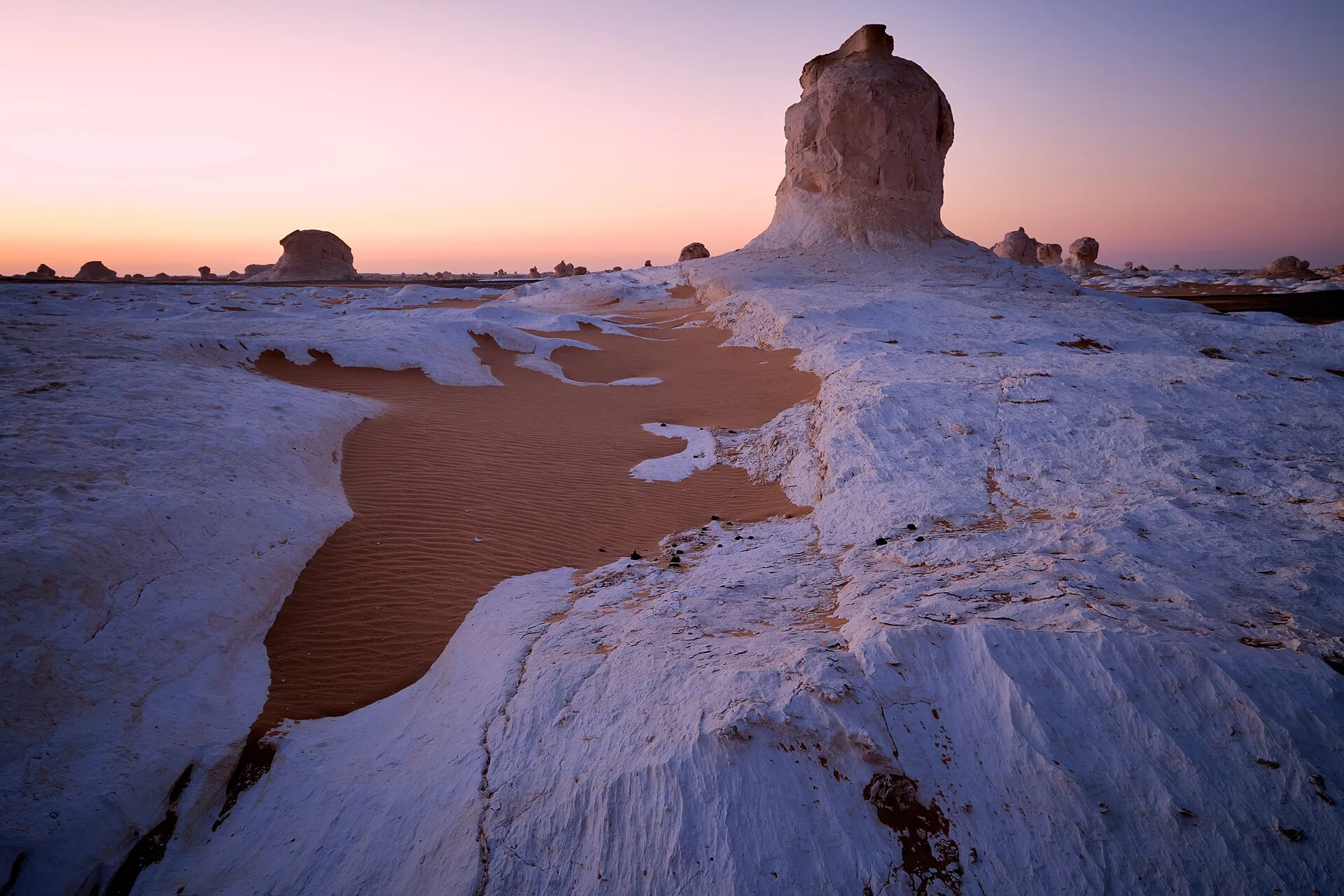
Bahariya Oasis is a green depression in Egypt's Western Desert, roughly 350 km south-west of the Giza Pyramids, reached by a drive of about 4 to 4.5 hours. It is one of the smaller oases on this route, a scatter of palm groves, hot springs and mudbrick villages built around the town of El Bawiti, but it carries outsized interest for travellers: gilded Greco-Roman mummies found in the desert nearby, warm spring pools after a day on dusty roads, and the start of the track that leads to the Black Desert, Crystal Mountain and the chalk towers of the White Desert. The first piece of Bahariya Oasis travel guide advice is to treat the oasis not as a single stop but as the first stage of a short desert circuit, because that is how the road, and most visits, actually work.
For anyone planning things to do in Bahariya Oasis, the order matters. Bahariya comes first on the road out of Cairo, then the Black Desert, then Crystal Mountain, then the White Desert further south. Treating it as a sequence, rather than a single destination, is the difference between a trip that flows and one that doubles back on itself.
The sights that matter most in Bahariya Oasis
Bahariya rewards a slow half day before the desert proper begins. The sights cluster close to Bawiti and can be covered without long transfers between them, which makes a first afternoon here feel unhurried rather than rushed.
The Valley of the Golden Mummies and the local museum
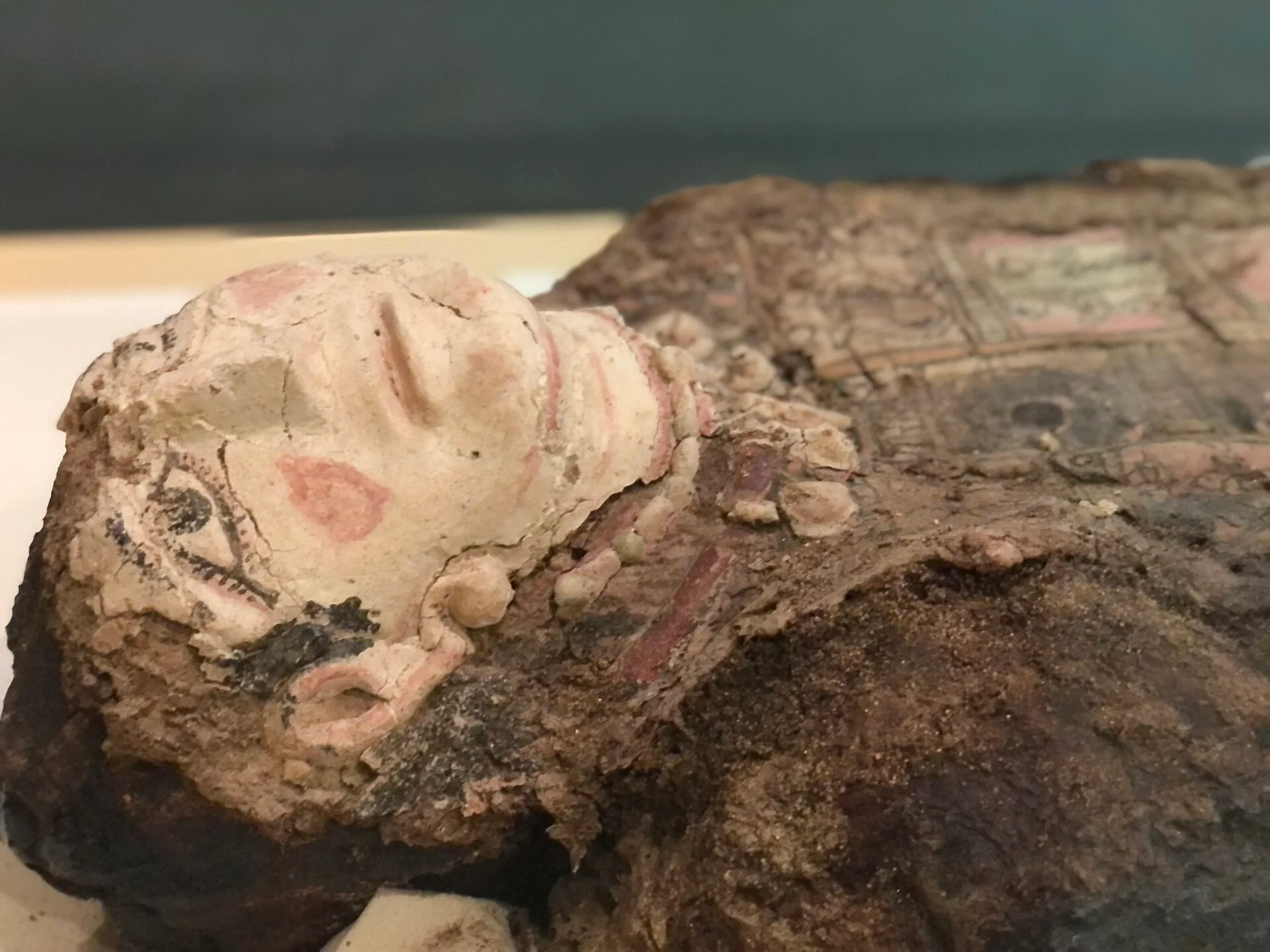
The Valley of the Golden Mummies, a few kilometres from Bawiti, is a Greco-Roman burial ground where archaeologists uncovered mummies wrapped in gilded cartonnage, a find that gave Bahariya Oasis its golden mummies a wider reputation. A selection of these pieces, along with other finds from the oasis, is displayed at the local museum in Bawiti. The excavation site itself is not open to visitors, so the mummies are seen at the museum in Bawiti, usually paired with the painted tombs of Bannentiu and Zed-Amun-ef-ankh; allow about an hour for both, a little longer if the group wants to read the labels on each case.
El Bawiti and the palm orchards
Bawiti itself is worth a slow walk or short drive: narrow lanes between mudbrick houses, old wells, and palm orchards that ring the town on several sides. It is the kind of place where an hour spent wandering tells you more than a checklist of sights. Guides based locally can point out the old Roman-era wells and the mix of farming and tourism that still shapes daily life here.
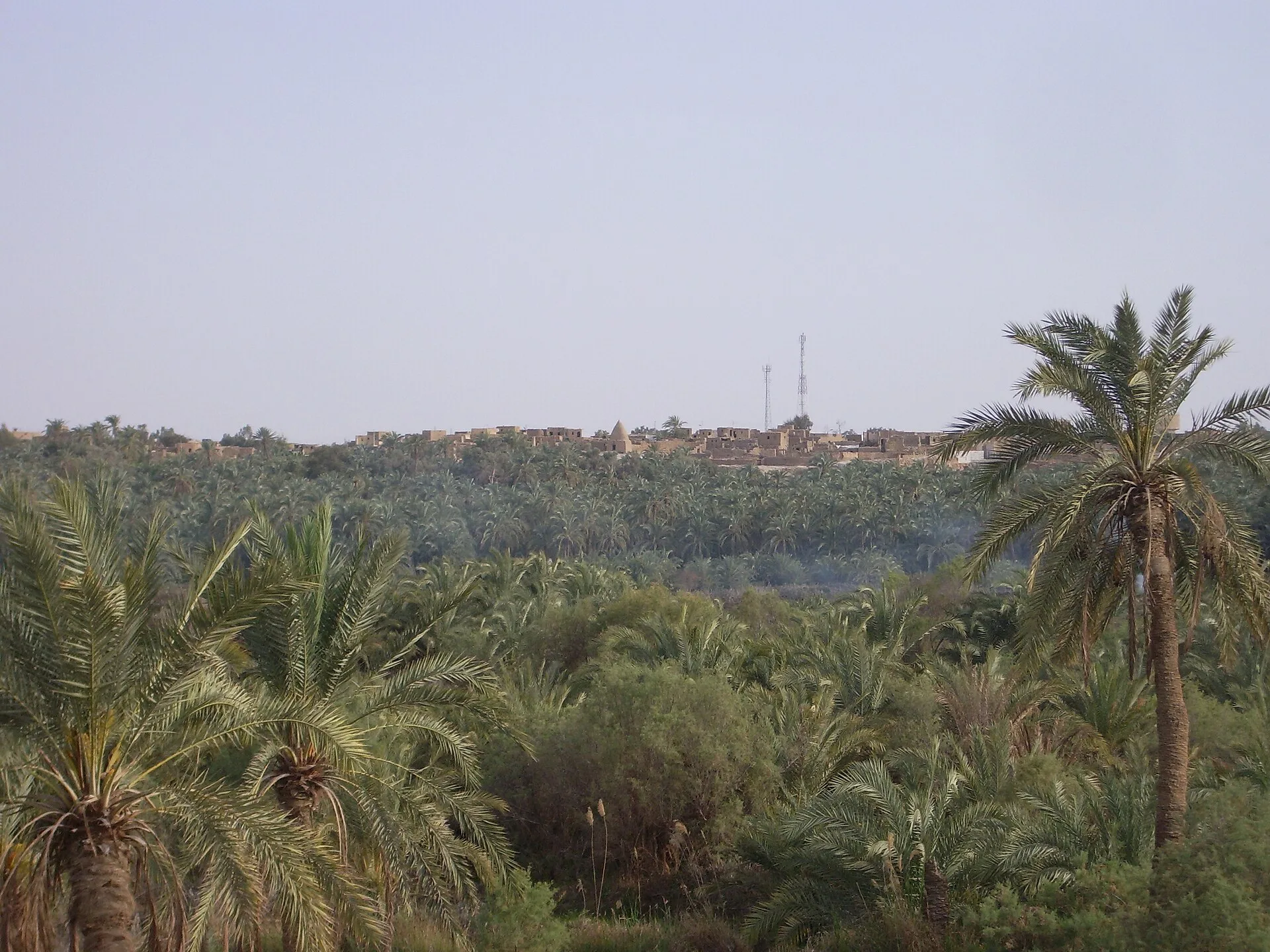
Gebel el Dist and the hot springs
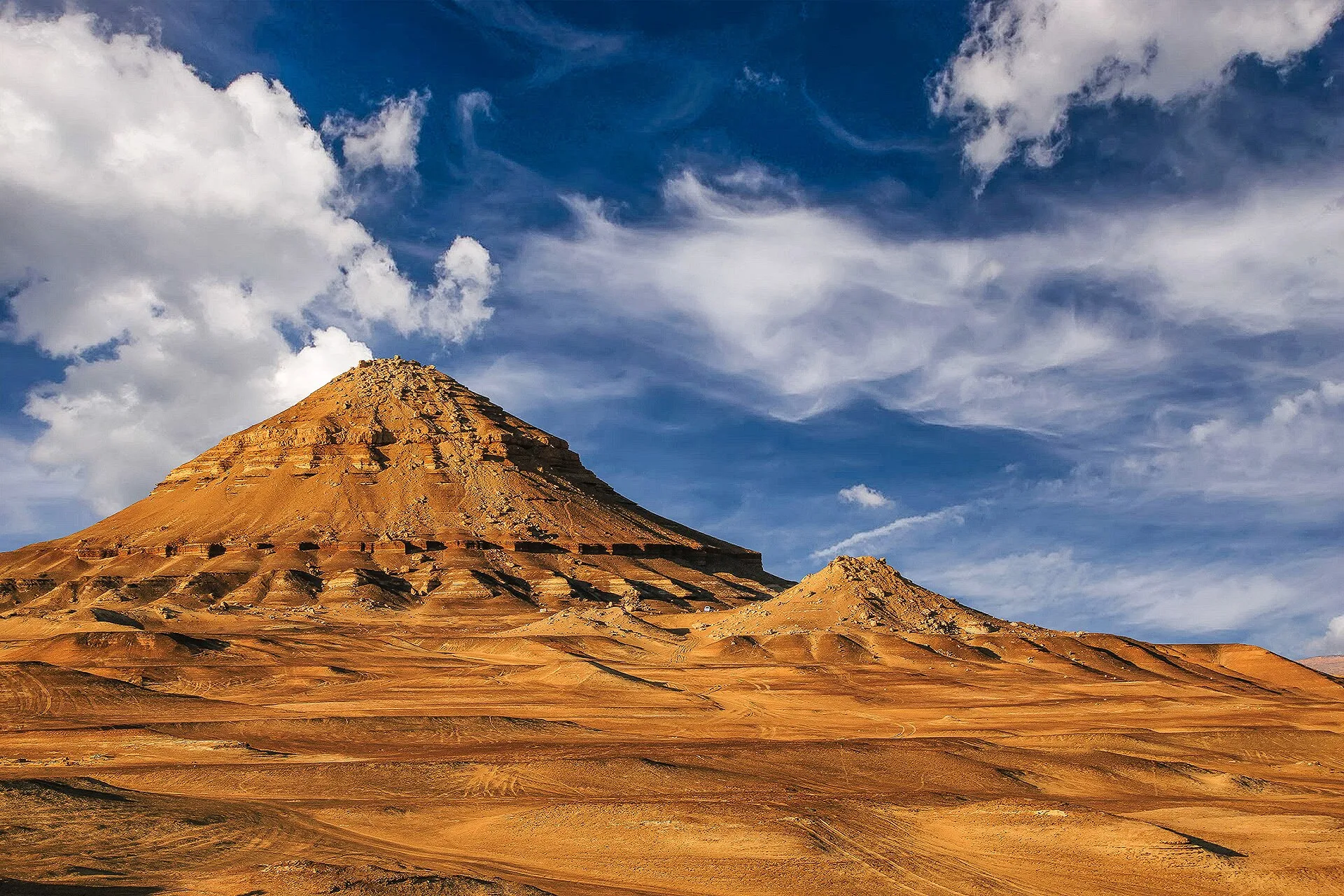
Gebel el Dist, a pyramid-shaped mountain that rises sharply from the flat oasis floor, is a natural landmark worth a stop for the view and the photograph. Bahariya's hot springs, several of them close to Bawiti, are usually visited in the late afternoon or evening, a welcome soak after a day of driving and walking on desert tracks. Some springs sit within easy reach of the main hotel in town, others are a short drive further out among the palms.
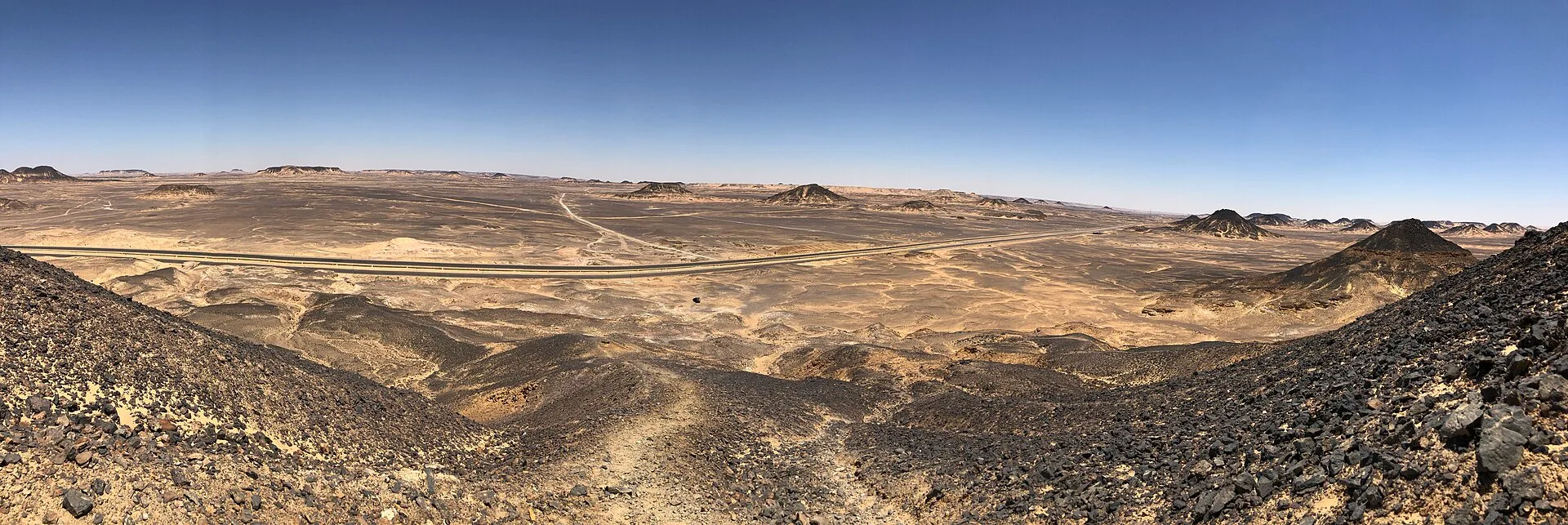
A Black Desert and White Desert tour from Bahariya
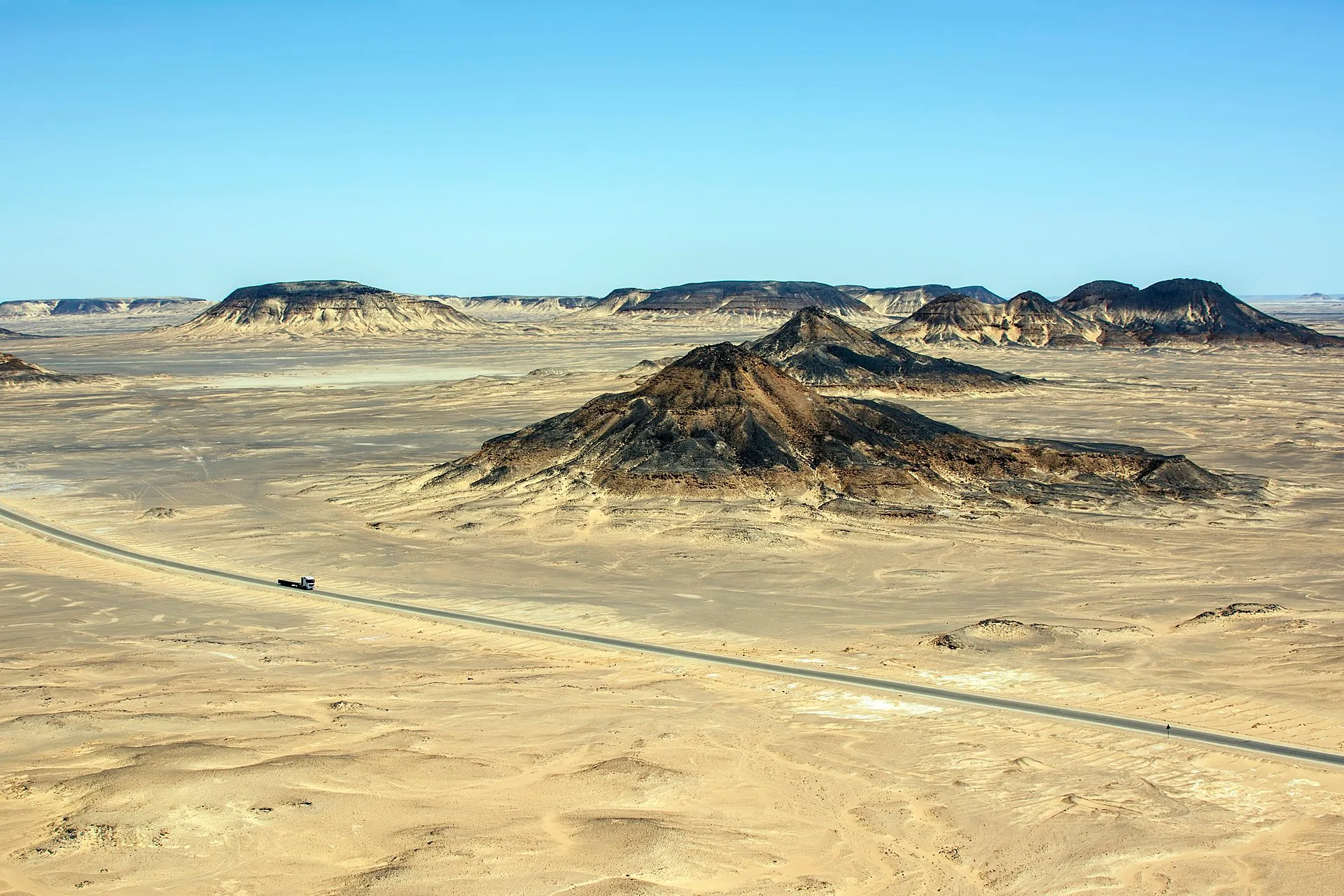
South of Bahariya the landscape changes fast. The Black Desert comes first, a stretch of hills dusted dark by volcanic rock and quartzite, where a short stop at a viewpoint gives a sense of the scale. Crystal Mountain follows further along the road, a ridge of rock studded with visible quartz veins; it is a quick stop, generally 15 to 20 minutes, but a memorable one, and a good place to stretch legs before the longer run south.
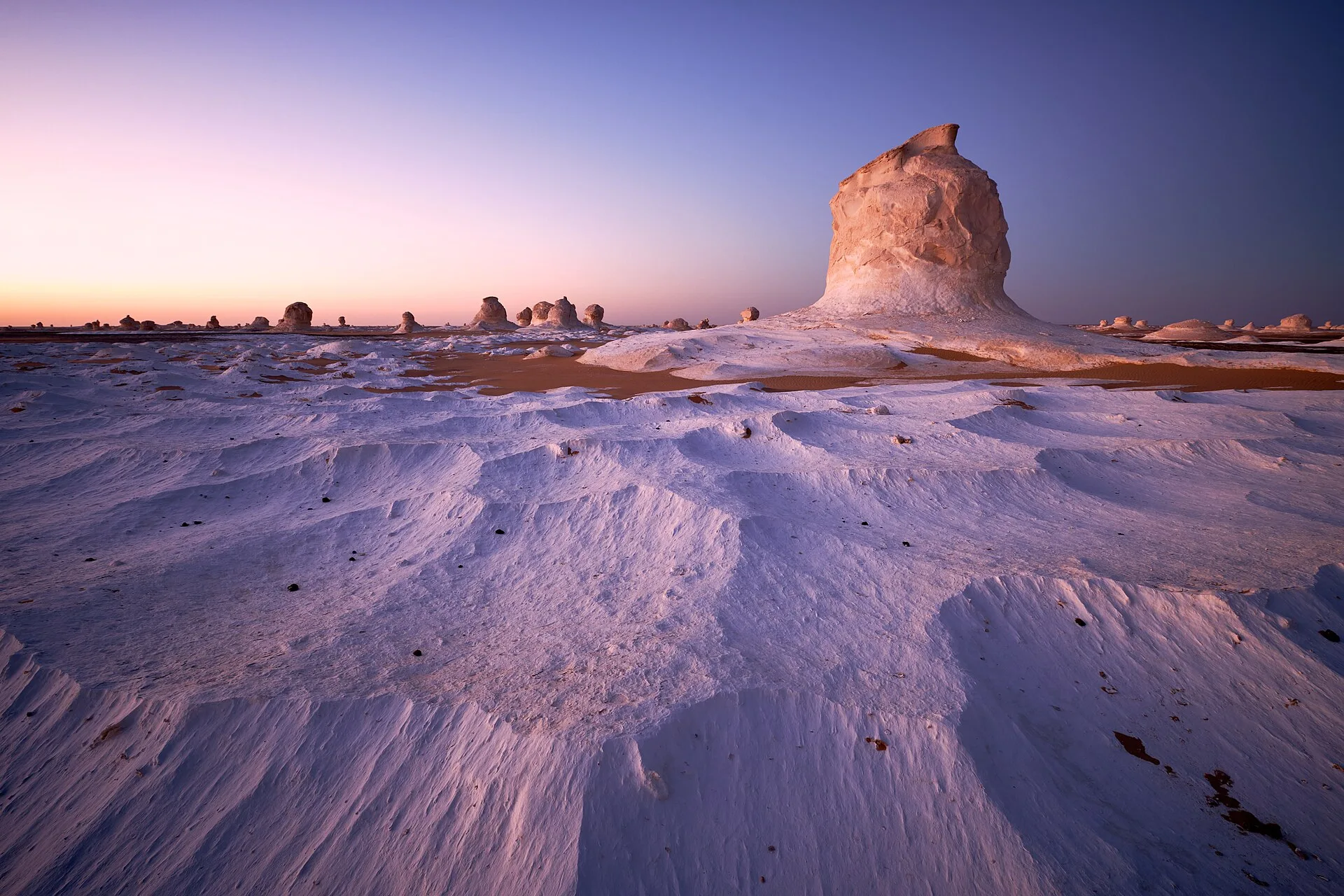
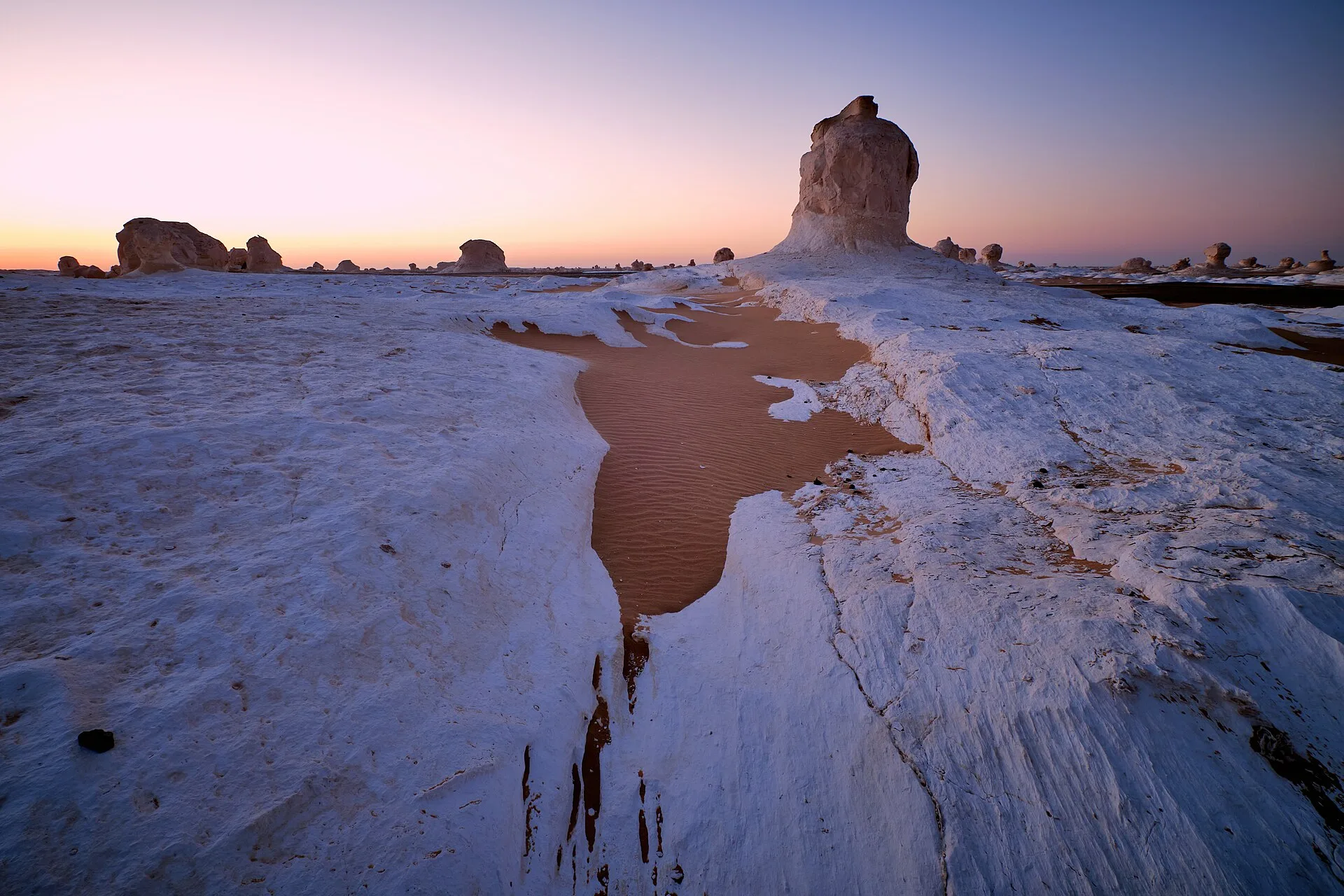
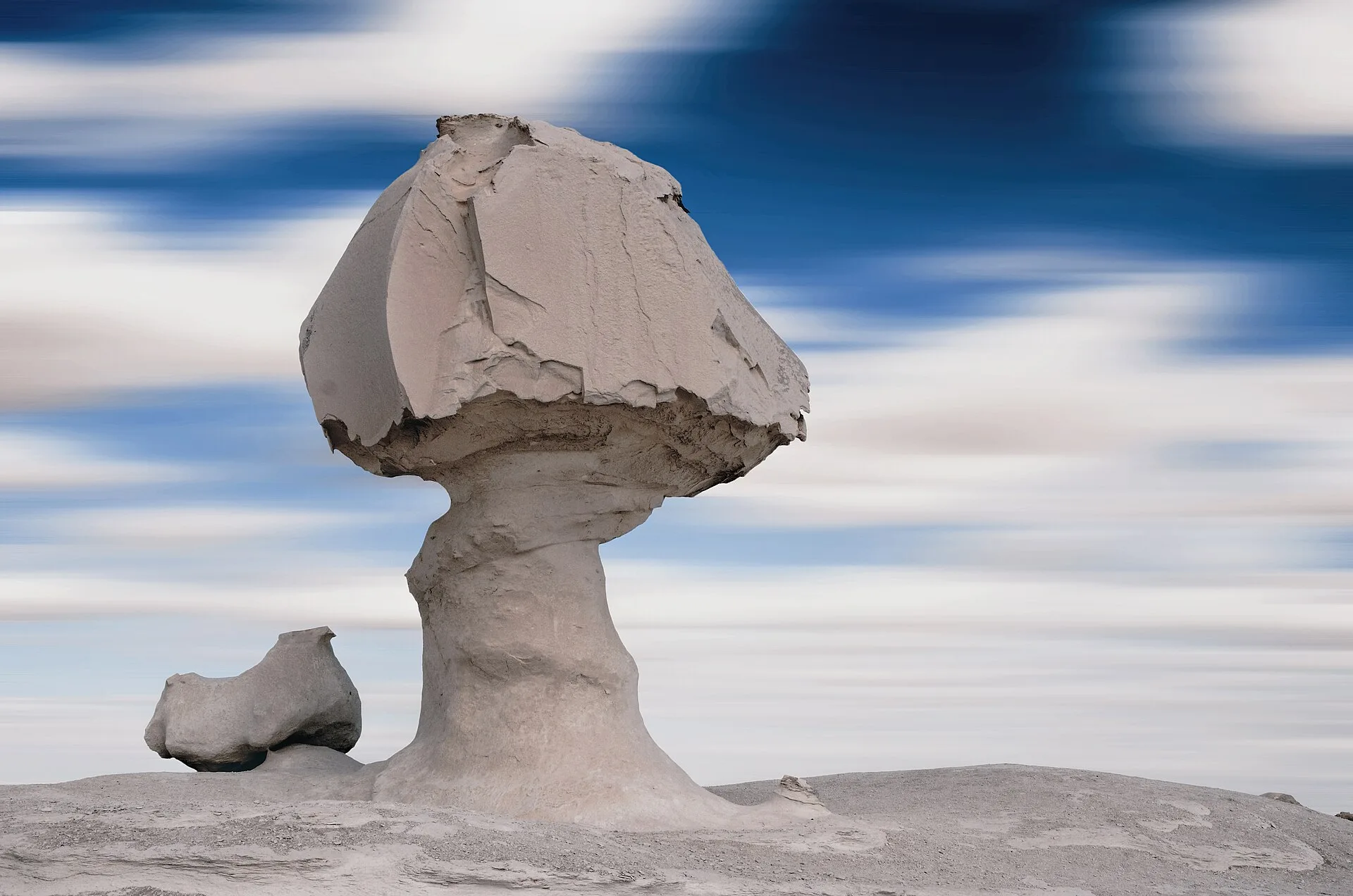
The White Desert National Park lies beyond both, and it is the reason most people make this trip at all. Chalk formations carved by wind and sand into shapes that locals and guides have nicknamed, the best known being the mushroom-shaped rock that appears in nearly every photograph of the park, rise out of a plain of pale sand. Camping here for a night, with dinner cooked over a fire and the formations catching the last light at sunset and the first at dawn, is the highlight of a Black Desert and White Desert tour. A night in the White Desert needs no booked hotel: camps are set up by the guiding team for the night, with mattresses, blankets and a simple dinner part of the arrangement.
How many days to give Bahariya Oasis
Two nights is the realistic minimum for anyone asking how many days in Bahariya Oasis to plan. That allows a drive out from Cairo, an afternoon seeing the golden mummies, the museum and the hot springs, then a push through the Black Desert and Crystal Mountain to reach the White Desert for a sunset arrival and a night camping, before the return drive the next day.
Three to four days suits a slower pace, with a full day in Bahariya itself rather than a rushed afternoon, a second night added either in Bahariya or in the White Desert, and time to explore Bawiti's lanes and orchards without watching the clock. Trying to compress the whole circuit into a single long day from Cairo is possible for Bahariya alone, but it does not do justice to the White Desert, where the point of going is to be there for sunset and sunrise, not to pass through at midday.
Travellers with more time sometimes extend the route past the White Desert to Farafra Oasis, adding another night and a quieter, less visited stop before turning back towards Cairo. This suits people who already have a Luxor or Aswan leg planned and want the desert side of Egypt to feel like more than a quick detour.
Best time of year to visit
The cooler months from October to April suit this part of the Western Desert best. Days are mild and comfortable for walking among the rock formations, and desert nights, which can be genuinely cold, are manageable with the blankets and warm layers that camping trips provide. Summer in Bahariya and the White Desert brings high daytime temperatures, which is why most operators and most travellers favour the shoulder seasons for this route. Pack a warm layer even in spring or autumn: the drop in temperature after sunset in the open desert surprises most first-time visitors.
Getting to Bahariya Oasis and getting around
Bahariya Oasis is reached from Cairo by road, a drive of around 4 to 4.5 hours along the desert highway, with a private vehicle the normal way to travel this route since there is no rail or scheduled flight service to the oasis. From Bahariya, the Black Desert, Crystal Mountain and the White Desert are a further few hours' drive south, best covered in a 4x4 once the tarmac gives way to desert track beyond the White Desert turn-off. A short rest stop partway along the highway is normal on both the outward and return legs, and most groups break the Cairo drive into two or three short stretches rather than one long push. Travellers based in Cairo for the rest of their trip will find Cairo's own sights, including the Pyramids and the Grand Egyptian Museum, a natural bookend before or after the desert leg.
Where to stay in Bahariya Oasis
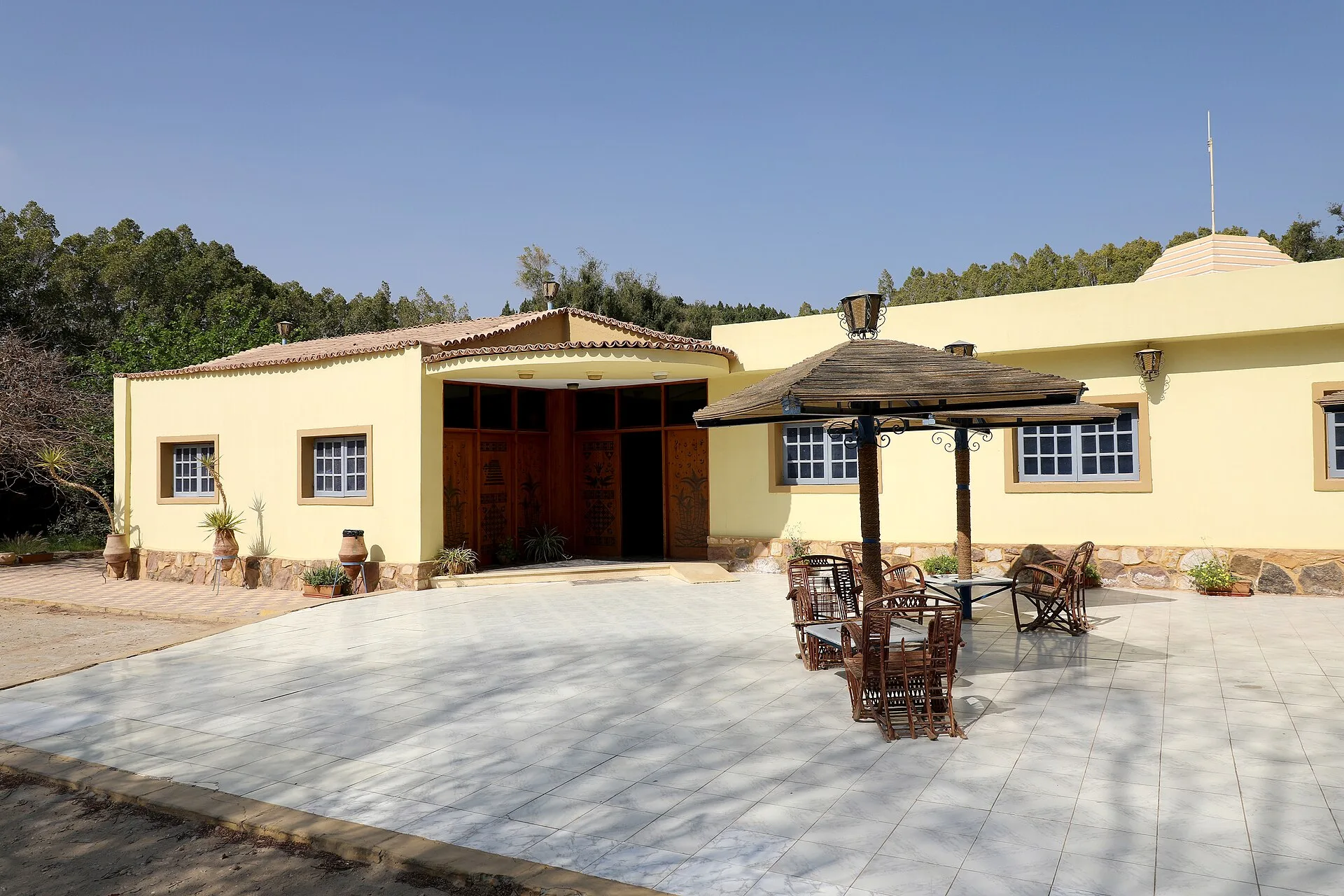
Bahariya has limited hotel choice compared with Cairo or the Nile cities, and most visits here are built around one property. The International Hot Spring Hotel is a 3-star property in El Bawiti, with its own hot-spring pools on site, useful after a dusty day on the desert tracks.
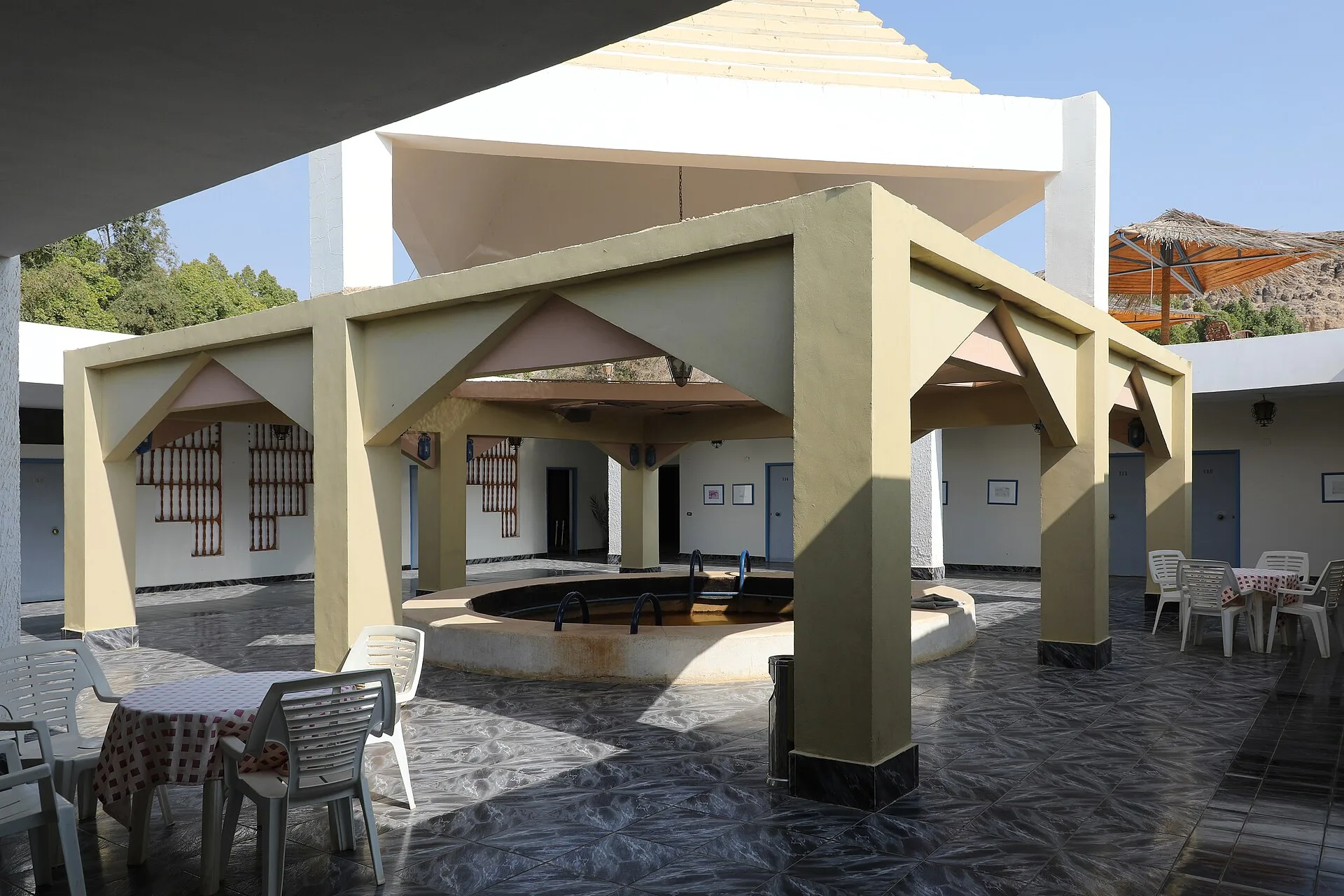
For the night in the White Desert itself, accommodation is a guided camp rather than a hotel, set up for the group under the chalk formations, which is part of the appeal of the trip rather than a gap in it.
Programmes that include Bahariya Oasis
Panda Travel Egypt runs this route regularly out of Cairo, and a couple of programmes are built specifically around it. Discover the White Desert & Bahariya leaves Cairo for the Western Desert, covering the golden mummies and tombs of Bahariya, the Black Desert, El Haize hot spring, Crystal Mountain and a night camping in the White Desert. The Cairo & Desert Adventure pairs the same desert circuit with time in Cairo for the Pyramids and the Grand Egyptian Museum, a six-day way to see both sides of Egypt in one trip. Travellers who want to see the full range of Western Desert options, including longer routes that take in Farafra, can browse the Desert Safari & Oases collection.
Anyone still working out where Bahariya fits against the rest of an Egypt trip, alongside Luxor, Aswan or the Red Sea coast, will find the overall planning easier after reading How Many Days in Egypt? Itineraries for 4, 5, 8 and 10 Days, which sets out how a desert extension sits against the classic Nile route.
Book the Bahariya and White Desert leg with a few spare hours either side of the drive days: the desert does not reward a tight schedule, and the best parts of it, the gold light on the chalk at dusk, the quiet of the camp at night, are the ones that cannot be rushed.