
Great Sphinx of Giza Facts: What a Guide Sees Every Week
By Panda Travel Egypt Published Reviewed by Ahmed Abdelmawgoud 7 min read
A guide's view of the Great Sphinx of Giza: the real story behind its missing nose, its age, the Dream Stele, and how to see it well in the time most visitors actually give it.
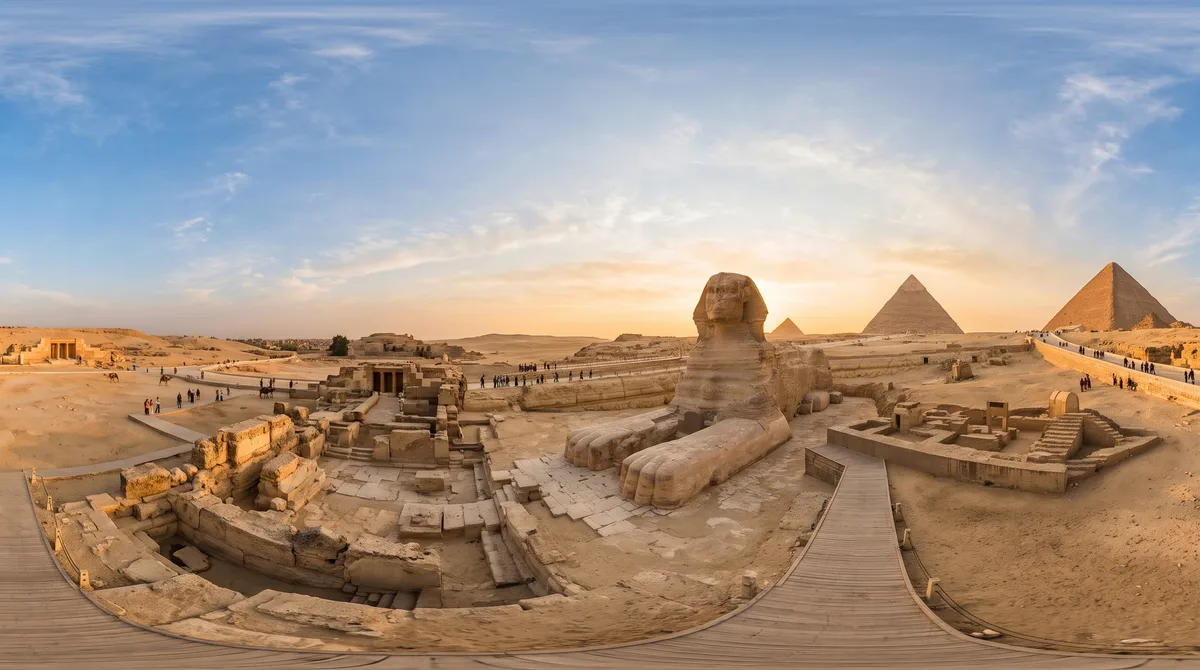
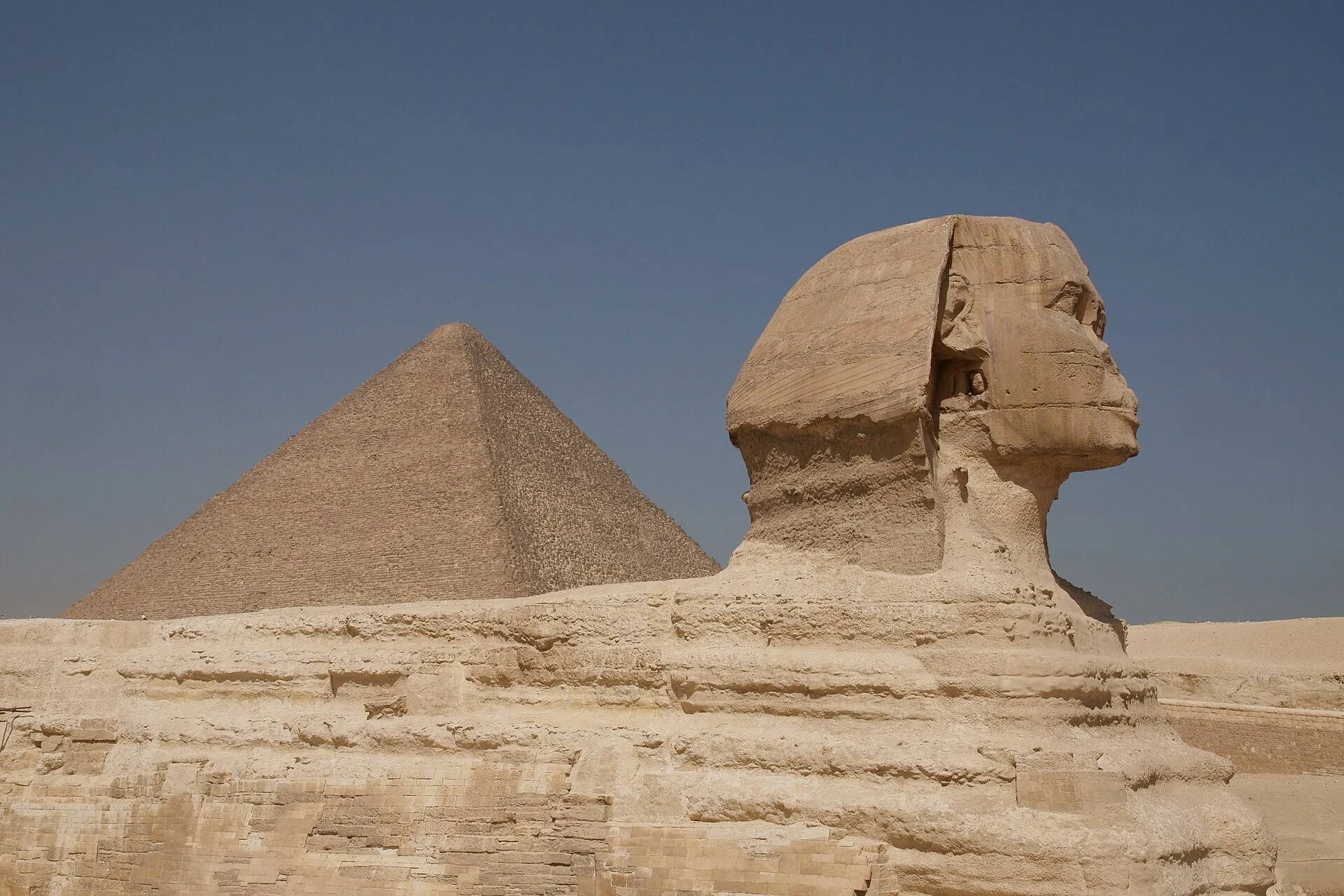
The Great Sphinx of Giza is a 73 m long, 20 m high limestone lion with a human face, carved from the plateau's natural bedrock around 2472 to 2448 BC during Khafre's reign. Its nose was deliberately removed, not lost to Napoleon's troops, and it stands beside Khafre's Valley Temple and the Dream Stele of Thutmose IV.
The Great Sphinx of Giza is a limestone statue of a recumbent lion with a human head, about 73 metres long and 20 metres high, carved directly from the natural bedrock of the Giza plateau rather than built up from blocks. Most of the great sphinx of giza facts that travellers want to know come down to three things: how old it is, what happened to its nose, and how it fits into Khafre's larger funerary complex beside it. Standing in front of it week after week, the same questions come up, and the stone itself answers most of them if you know where to look.
This is not a monument that needs an hour. Most groups spend 20 to 30 minutes on the viewing terrace and beside the Valley Temple, which is enough time to take in the whole statue, read the Dream Stele from a distance and get the photograph everyone comes for. What matters is using those minutes well, rather than treating the Sphinx as a quick stop between the pyramids and the car park.
Great Sphinx of Giza facts: age and builder
Most scholars date the Great Sphinx to the reign of Khafre in the 4th Dynasty, roughly 2472 to 2448 BC, which puts it at around 4,500 years old. The face is generally thought to be a portrait of Khafre himself, the pharaoh whose pyramid rises directly behind the statue. Limestone blocks cut from the ditch dug around the Sphinx were reused in the walls of the Sphinx Temple nearby, which is one of the clearer pieces of evidence tying the quarrying of the Sphinx to the wider building programme of Khafre's reign.
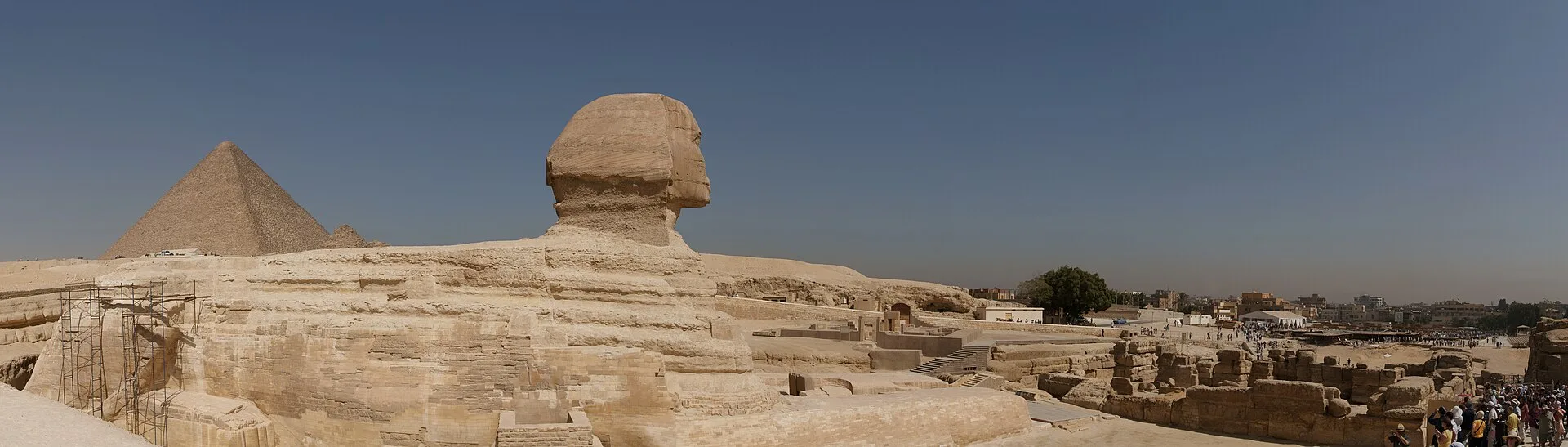
The Sphinx faces east and lies southeast of Khafre's pyramid, north of the causeway that links Khafre's valley temple to his pyramid. Seeing it in that position, rather than as an isolated curiosity, makes the sphinx of giza history easier to follow: it was carved as part of a single funerary complex, not added afterwards.
Why does the Sphinx have no nose
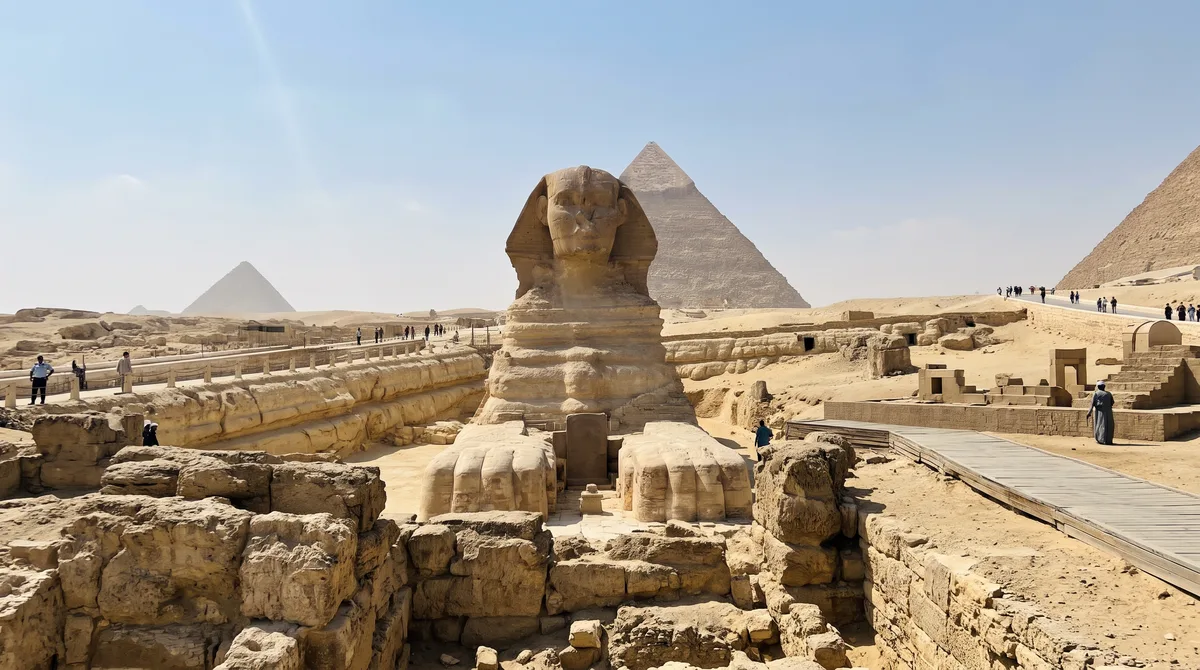
The missing nose is the detail every visitor asks about first, and the popular story, that Napoleon's soldiers used it for target practice in 1798, is simply wrong. A drawing made by the Danish explorer Frederic Louis Norden in 1737 already shows the Sphinx without its nose, more than 60 years before Napoleon's campaign in Egypt even began.
Close examination of the face shows the nose was removed deliberately, with rods or chisels driven into the stone rather than a single blow. The 15th century historian al-Maqrizi blamed a Sufi named Muhammad Sa'im al-Dahr, who is said to have defaced the Sphinx in 1378 after seeing local peasants leaving offerings to it. The date of that specific act has never been proven, and the Egyptologist Mark Lehner has placed the damage anywhere between the 3rd and 10th centuries AD. What is certain is that it happened centuries before any European soldier set foot on the plateau.
Reading the stone: limestone, weathering and lost colour
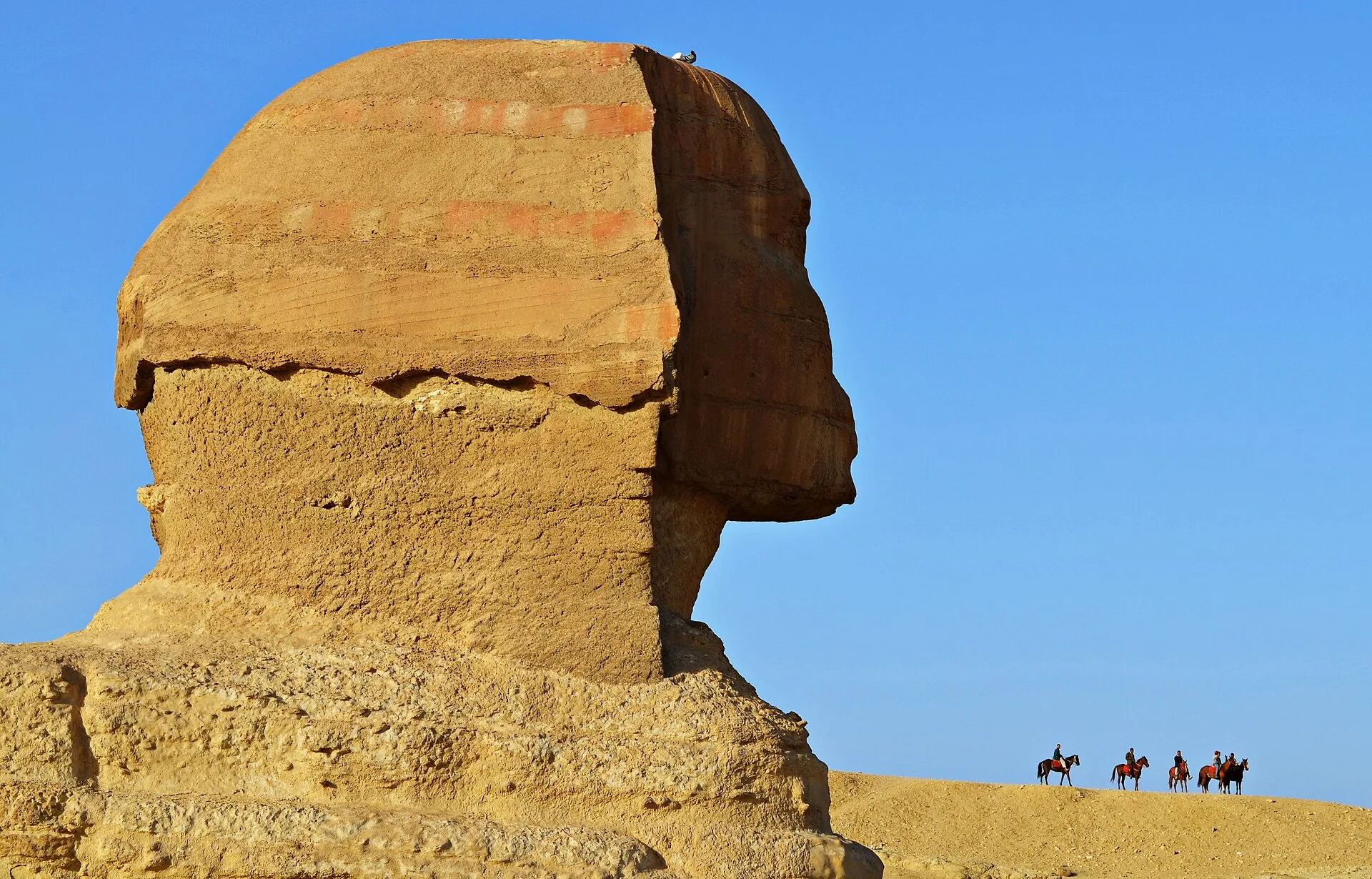
Look closely at the body of the Sphinx and you will notice it is in rougher condition than the head. That is because the softer limestone layers used for the body have weathered faster over 4,500 years than the denser stone of the head, which has held its shape and detail far better. The layering is a geological accident of the plateau itself, not a flaw in the carving.
Pigment residue found on the statue suggests the whole Sphinx was originally painted, likely in strong colour across the face and body, a detail that is easy to miss when the limestone now reads as uniformly pale. Picture it with colour still on it and the statue looks considerably less weathered than the stone alone suggests today.
The Dream Stele and the Valley Temple
Between the Sphinx's front paws stands the Dream Stele, a granite slab about 3.6 metres tall and roughly 15 tons in weight, originally a reused door lintel from Khafre's mortuary temple. Thutmose IV erected it in the first year of his reign, around 1401 BC, more than a thousand years after the Sphinx itself was carved. The text describes how Thutmose fell asleep in the shadow of the half-buried Sphinx and dreamed that it promised him the throne if he cleared the sand that had buried it up to its neck. Whether or not the story is literally true, the stele is a genuine record of how later Egyptians already saw the Sphinx as an ancient and powerful monument worth restoring.
Immediately beside the Sphinx stands the Valley Temple of Khafre, built of limestone faced with blocks of granite brought from Aswan, and part of the same funerary complex. It is easy to walk past without noticing, since the Sphinx understandably draws every eye.
Where the Sphinx stands and the view everyone wants
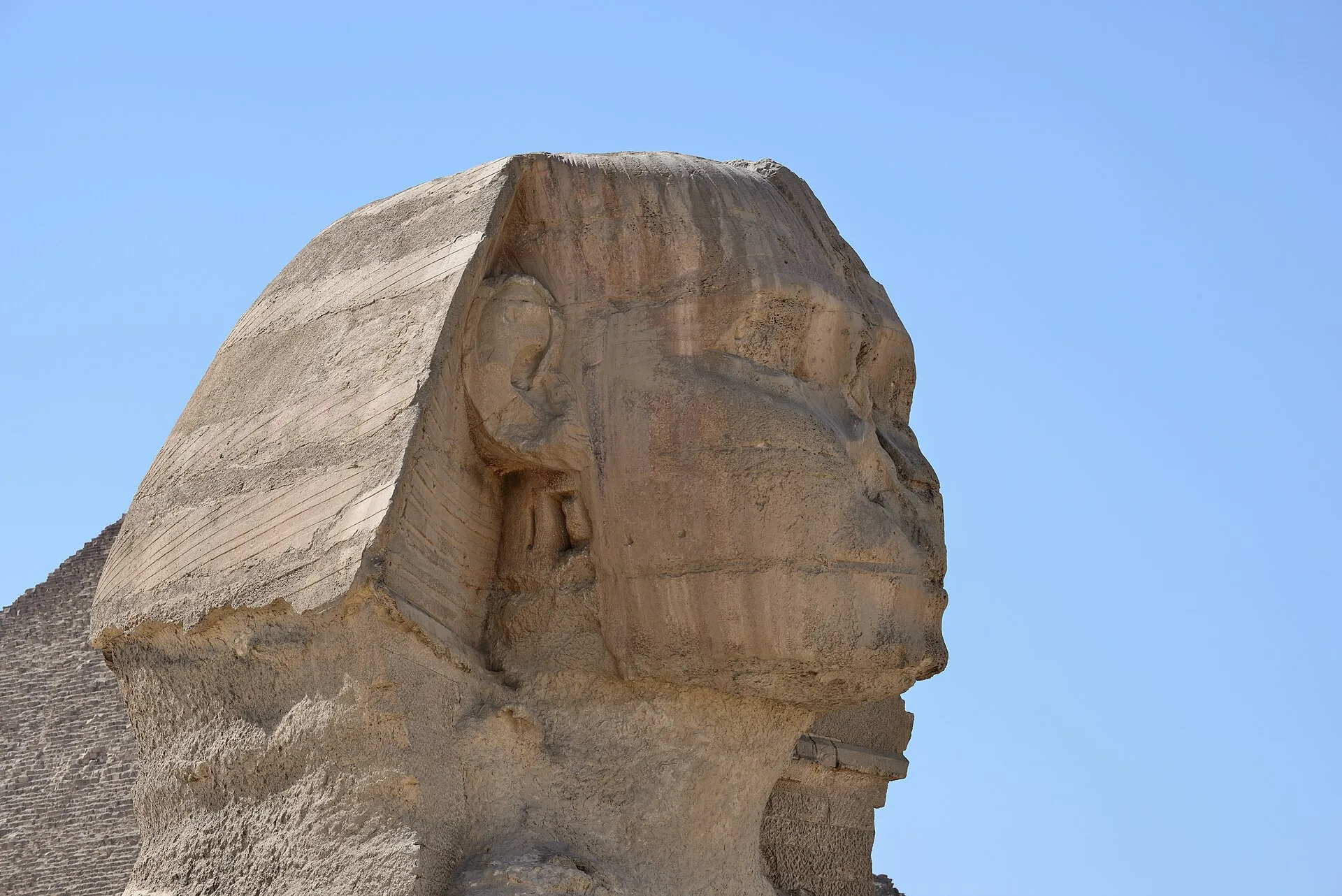
The Sphinx stands on the same plateau as the pyramids, about 500 metres from the Great Pyramid and directly on the axis of Khafre's valley temple. The photograph most visitors are after, the Sphinx in profile with the Pyramid of Khafre rising behind it, is taken from the lower viewing terrace in front of the statue, not from up on the plateau near the pyramids themselves. Arrive earlier in the day if you can, since the light is softer before the sun is directly overhead.
Fitting the Sphinx into a Giza plateau visit
The Sphinx sits lower on the plateau than the pyramids, a short walk or drive down from them, and the two are usually seen in the same visit rather than as separate trips. A sensible order is the three pyramids first, since the walk between them at an easy pace takes about 30 to 45 minutes, then down to the Sphinx and the Valley Temple for a final 20 to 30 minutes before heading on.
Many travellers pair the plateau with the Grand Egyptian Museum, which stands close by on the Cairo-Alexandria Desert Road and now holds Khufu's full-size funerary boat, moved there from the old boat museum on the plateau, which is now closed. A proper museum visit needs three to four hours on its own, so giving the pyramids and Sphinx a morning and the museum an afternoon, or a separate day entirely, works better than trying to rush both. Our Giza destination guide covers how much time to allow for each part of the plateau, and the Cairo destination guide sets out how the plateau and museum fit alongside Old Cairo.
Travellers curious about the engineering behind the pyramid itself, rather than the Sphinx, will find more in our piece on the secrets of the Great Pyramid of Giza, which covers Khufu's chambers and the ongoing scanning work inside the monument.
Where to stay for an early start
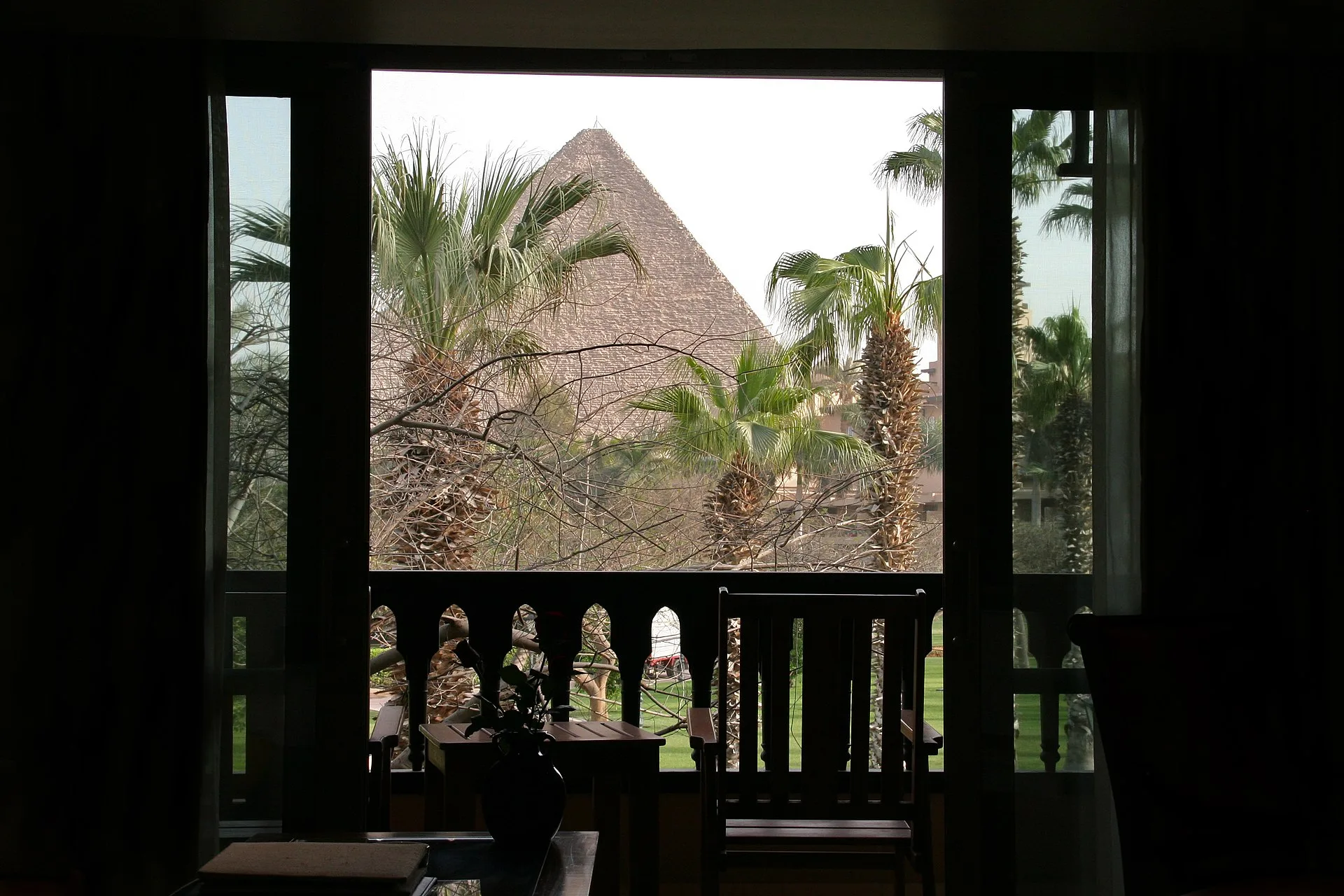
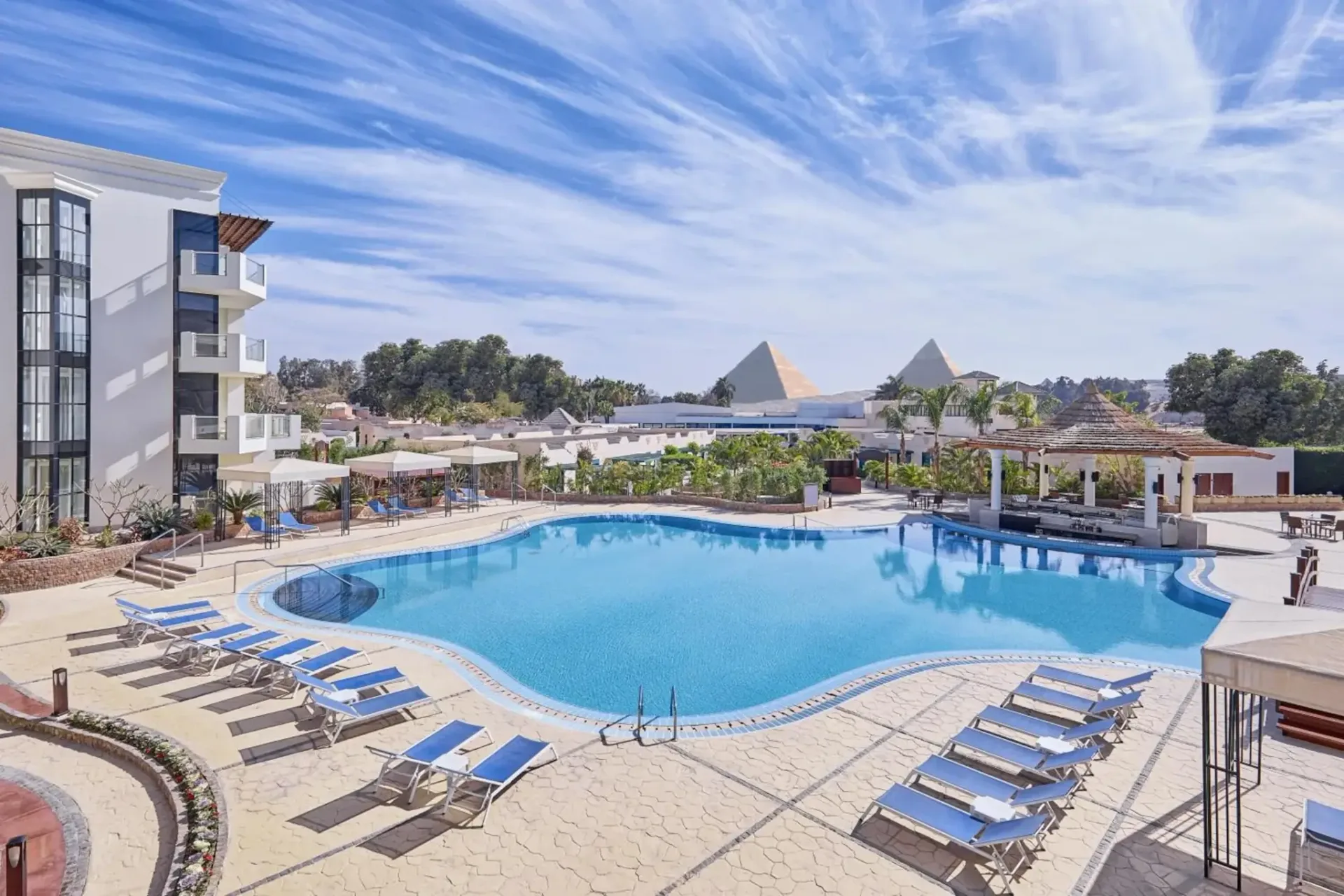
Travellers who want to be among the first through the gate often choose to stay close to the plateau rather than drive out from central Cairo. Marriott Mena House began life in 1869 as a royal hunting lodge at the foot of the plateau, and it remains the closest hotel to the Great Pyramid, with views of it from many rooms and the pool.
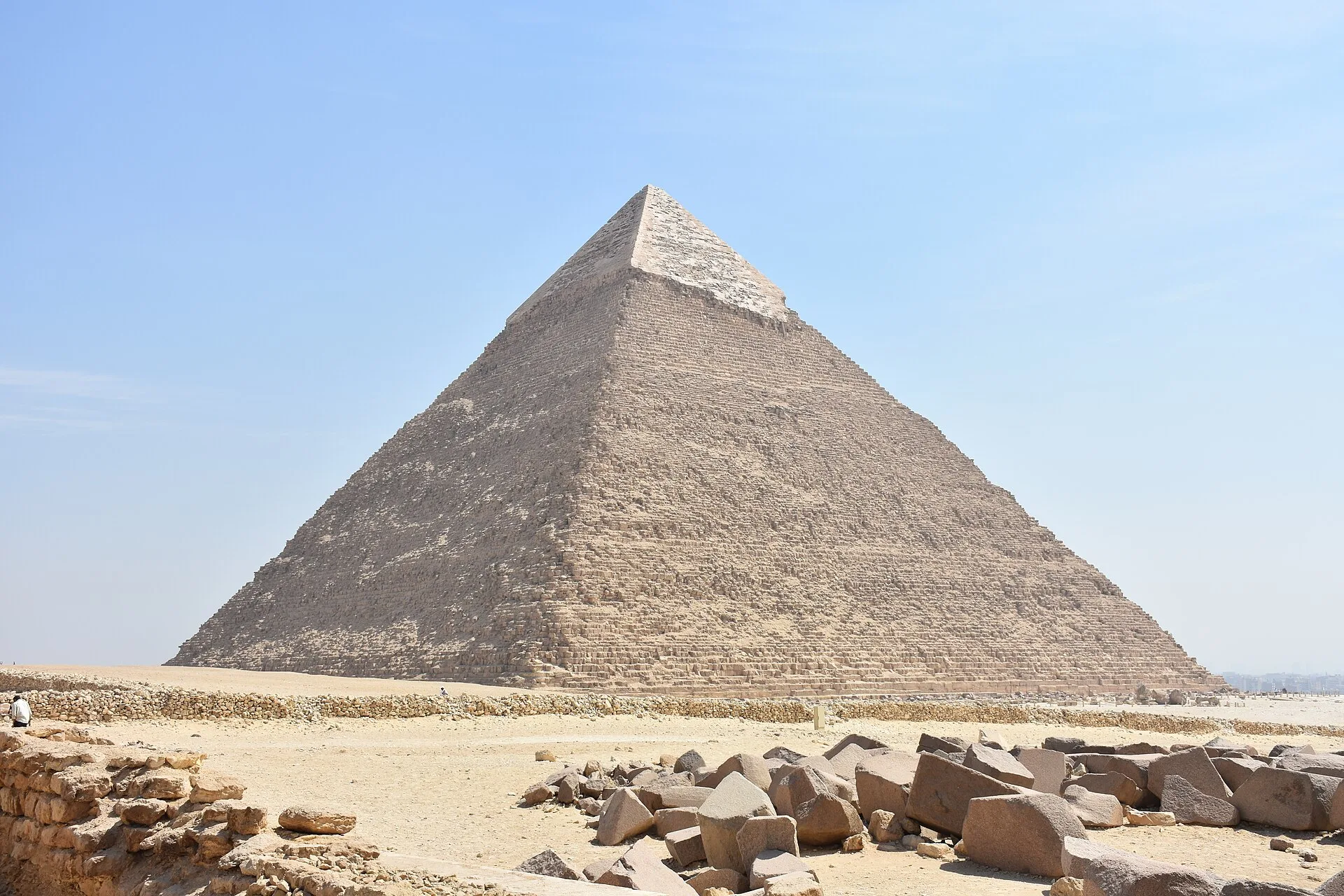
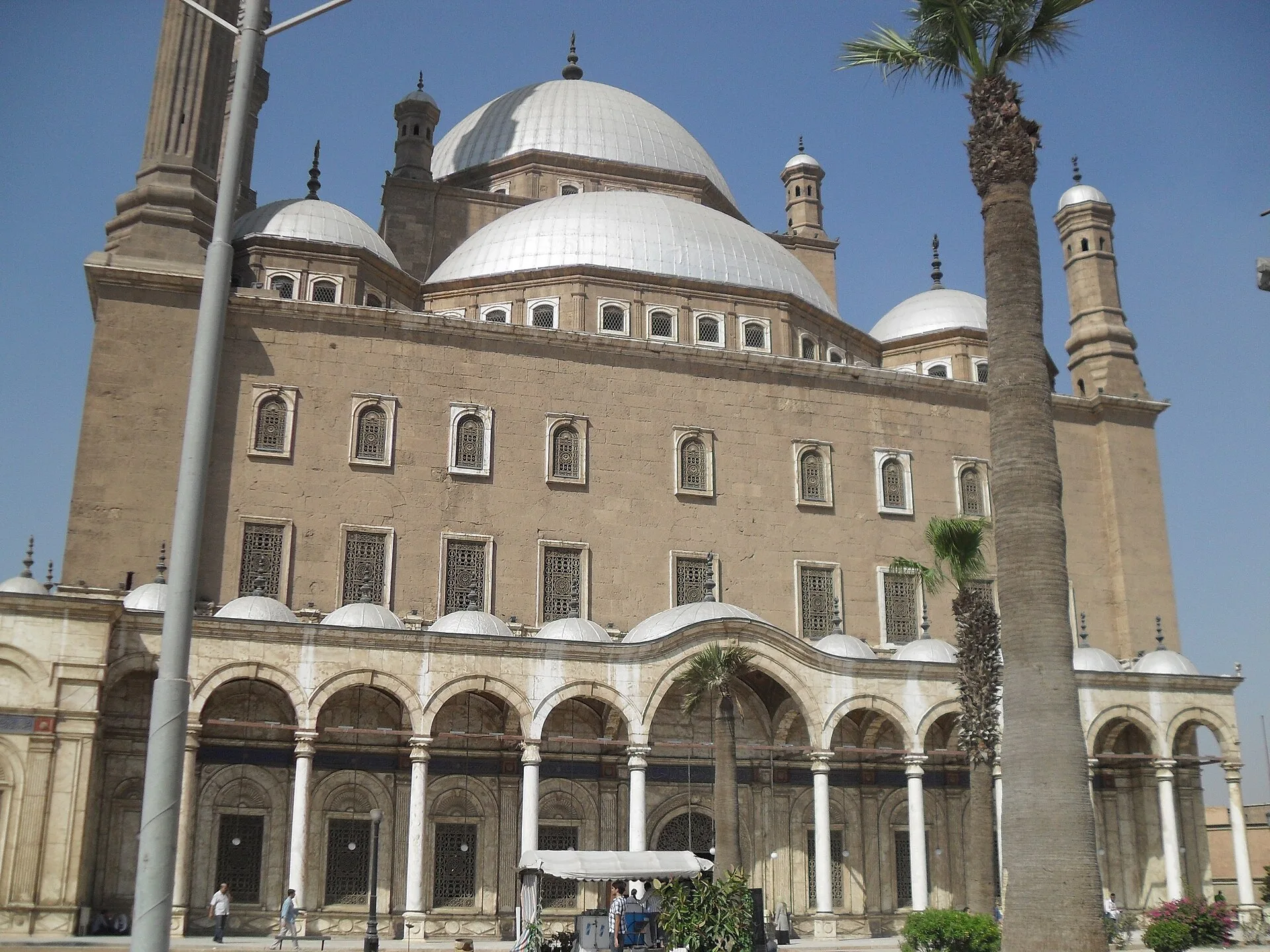
Panda Travel Egypt includes the Sphinx and pyramids in Cairo programmes with a private guide and private transport. The four-day, three-night Discover Cairo Like Never Before programme pairs the Pyramids, the Sphinx and the Grand Egyptian Museum with the royal mummies at the National Museum of Egyptian Civilization, Old Cairo and the Saladin Citadel, staying at Marriott Mena House or Steigenberger Pyramids Cairo.
Sphinx and pyramids in context: a quick reference
| Feature | Detail |
|---|---|
| Size | About 73 m long, 20 m high, about 19 m wide at the rear paws |
| Date | Reign of Khafre, c. 2472 to 2448 BC |
| Material | Natural limestone bedrock of the Giza plateau |
| Nearby monument | Khafre's Valley Temple, limestone with Aswan granite facing |
| Added later | Dream Stele of Thutmose IV, granite, c. 1401 BC |
| Distance from the Great Pyramid | About 500 m, on the axis of Khafre's valley temple |
| Typical time needed | 20 to 30 minutes at the terrace and Valley Temple |
Set the Sphinx and pyramids against the full day the plateau deserves, and the detail that stands out is not the missing nose but how deliberately the whole complex, pyramid, causeway, valley temple and Sphinx, was laid out as one piece of ground. For travellers planning the rest of a Cairo trip around it, the wider Classic Egypt Tours collection shows how Giza opens onto Luxor and Aswan for travellers with more than a few days to give Egypt.
Sources
Plan Discover Cairo Like Never Before
Tell us your dates and who is travelling. We reply with the programme day by day, and its price.
Frequently asked
How old is the Sphinx of Giza?
Most scholars date the Great Sphinx to the reign of Khafre in the 4th Dynasty, roughly 2472 to 2448 BC, which makes it about 4,500 years old. The face is thought to be a portrait of Khafre himself, whose pyramid stands directly behind the statue.
Why does the Sphinx have no nose?
The nose was deliberately removed with rods or chisels driven into the stone, not shot off by Napoleon's soldiers. A 1737 drawing by Frederic Louis Norden already shows the Sphinx without its nose, over 60 years before Napoleon arrived in Egypt. One account blames a 14th century Sufi who defaced it, though the exact date is not proven.
What is the Dream Stele and where is it?
The Dream Stele is a 3.6 m granite slab standing between the Sphinx's front paws, erected by Thutmose IV around 1401 BC. It describes how Thutmose fell asleep in the shadow of the half-buried Sphinx and dreamed it promised him the throne if he cleared the sand burying it to the neck, and it was carved from a reused lintel from Khafre's mortuary temple.
How much time do you need at the Great Sphinx of Giza?
Most visitors spend 20 to 30 minutes at the Sphinx itself: enough time to walk the viewing terrace, read the Dream Stele from a distance and see the Valley Temple beside it. It fits naturally into a half or full day at the Giza plateau alongside the three pyramids.
Is the Sphinx part of the pyramids or a separate site?
The Sphinx stands on the same plateau as the pyramids, about 500 m from the Great Pyramid and directly on the axis of Khafre's valley temple. It is part of the same plateau visit; check the current ticket details on egymonuments.gov.eg.
Can you combine the Sphinx with the Grand Egyptian Museum in one day?
Yes, though it makes for a full day. The museum sits close to the plateau on the Cairo-Alexandria Desert Road, but a proper visit needs three to four hours on its own, so many travellers prefer to give the pyramids and Sphinx a morning and the museum an afternoon or a separate day.
Places in this article
Tours for this trip
 Cairo Short Breaks
Discover Cairo Like Never Before
4 days · 3 nights2 places
View tour
 Budget Egypt
Pyramids and Nile Escape Budget Program
8 days · 7 nights3 nights on the Nile5 places
View tour
 Classic Egypt Tours
Pyramids and Nile Escape Program
8 days · 7 nights4 nights on the Nile5 places
View tour
Nile cruises for this trip



Where to stay
Read next
- Khan El Khalili Bazaar Guide: Walking Islamic Cairo in Order A local operator's walking order through Islamic Cairo: Al Muizz Street, its mosques and madrasas, and Khan El
- Old Cairo Coptic Quarter: A Walking Order That Actually Works A sight-by-sight walking order for the Old Cairo Coptic Quarter, how long it really takes on foot, and how it
- Saqqara and Dahshur: A Local Operator's Day Trip Order A local operator's order of visits for Saqqara and Dahshur, with realistic timings, drive distances and what t
- Grand Egyptian Museum Tickets and Tips: A Visit Plan That Works A practical plan for Grand Egyptian Museum tickets, gallery order, timing and how it fits with a Giza pyramids