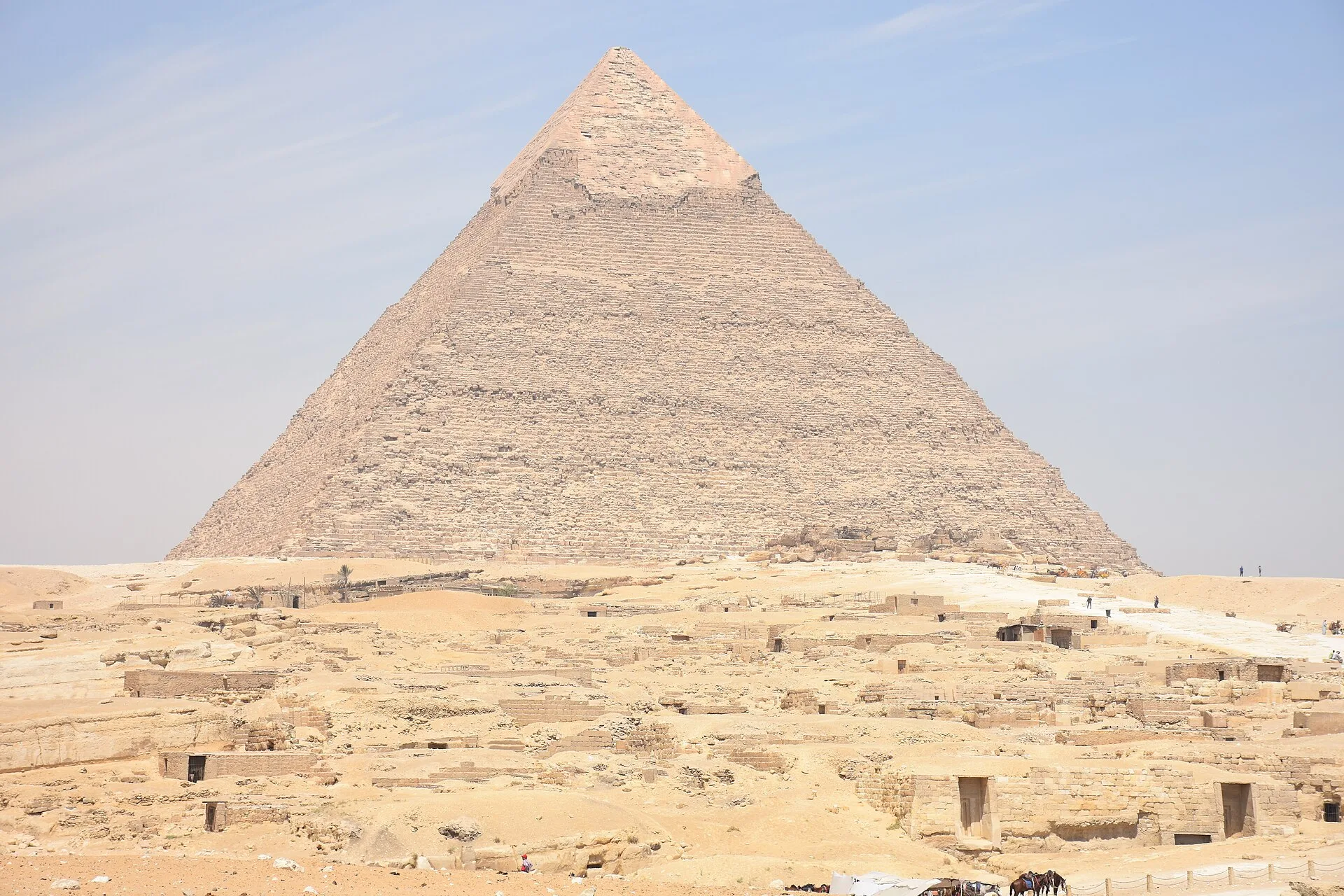
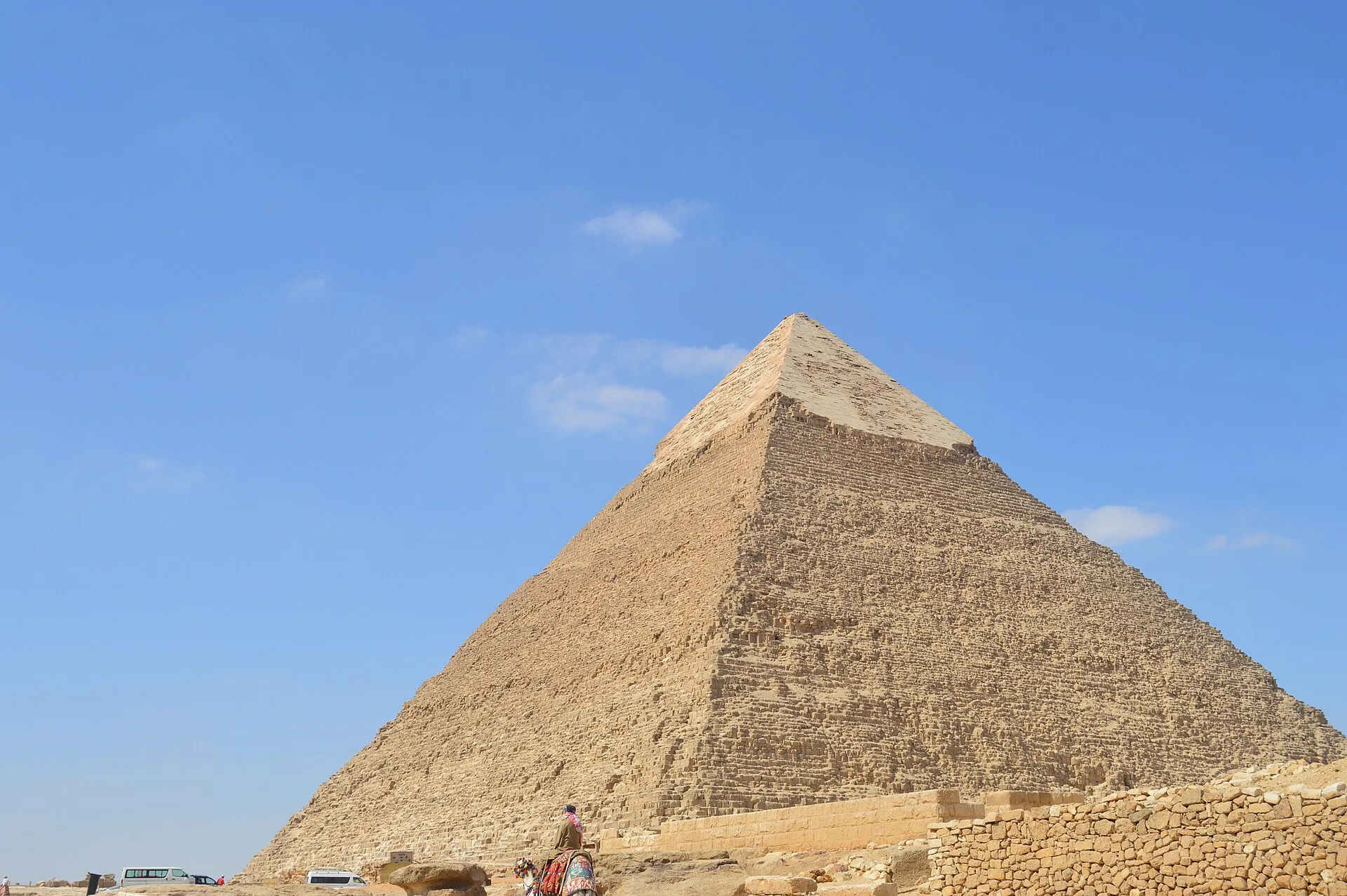
Giza is the desert plateau on the western edge of Greater Cairo where the three Great Pyramids, the Sphinx and, now, the Grand Egyptian Museum all stand within a few minutes' drive of each other. It is the single site most visitors to Egypt travel to see, and it earns the reputation: nowhere else in the country packs so much into so small an area. Giza travel guide basics come down to three things: the order you see things in, how long each part takes and when you turn up, because the plateau rewards a planned visit far more than a rushed one.
Most travellers base themselves in Cairo and come out to Giza for the day, and that works well, since the drive from central Cairo is short. Others prefer to stay on the plateau itself, waking up with the pyramids outside the window. Either way, Giza deserves a full day of its own, not a stop squeezed between other sights. For the fuller picture of how Giza fits into a Cairo stay, our Cairo and Giza guide to the Pyramids, Sphinx and Grand Egyptian Museum goes through the combined visit in more detail.
Giza travel guide: the sights that matter most
The plateau has four things worth your time, and they sit in a natural order that follows the ground itself.
The three pyramids
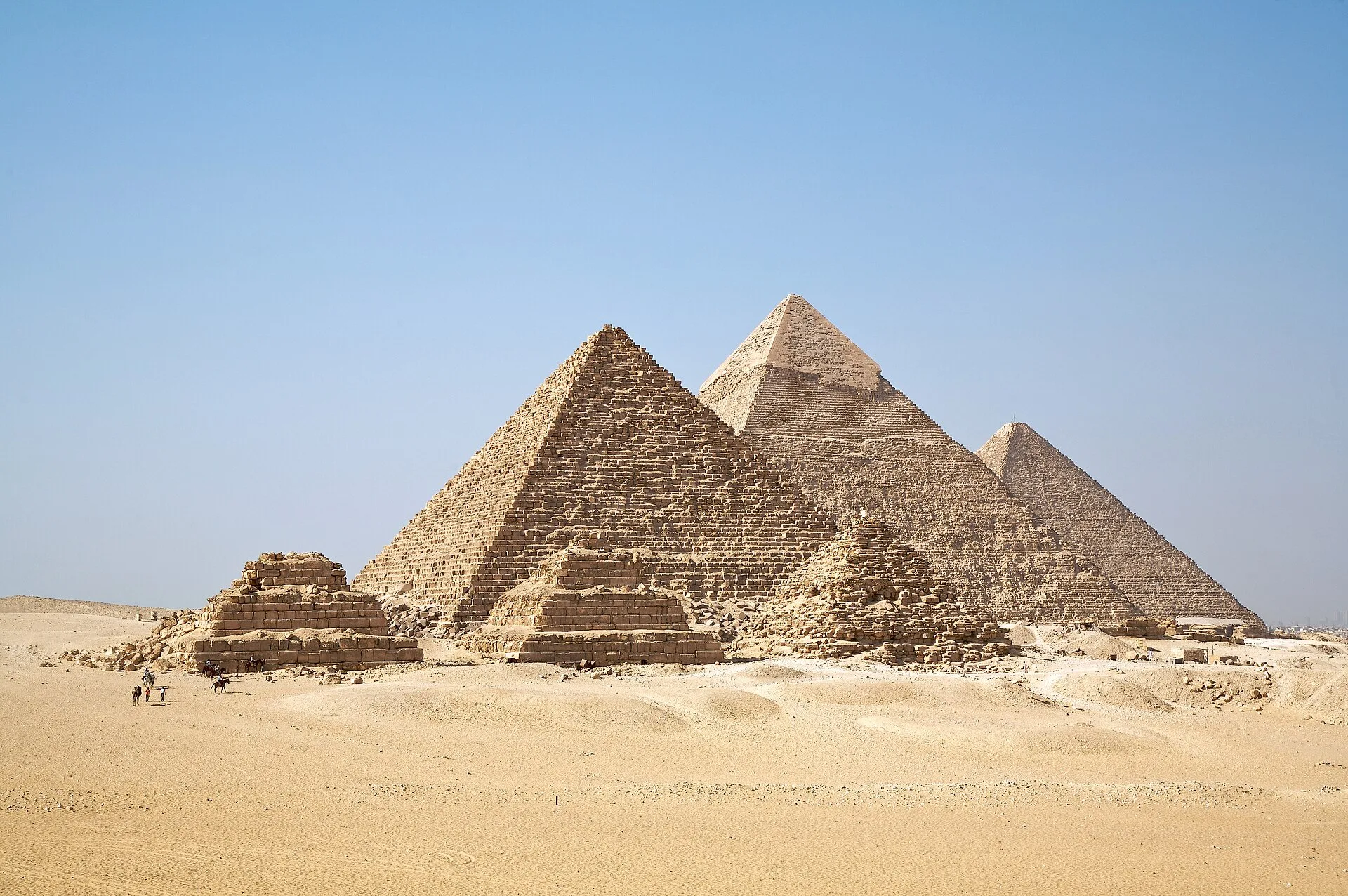
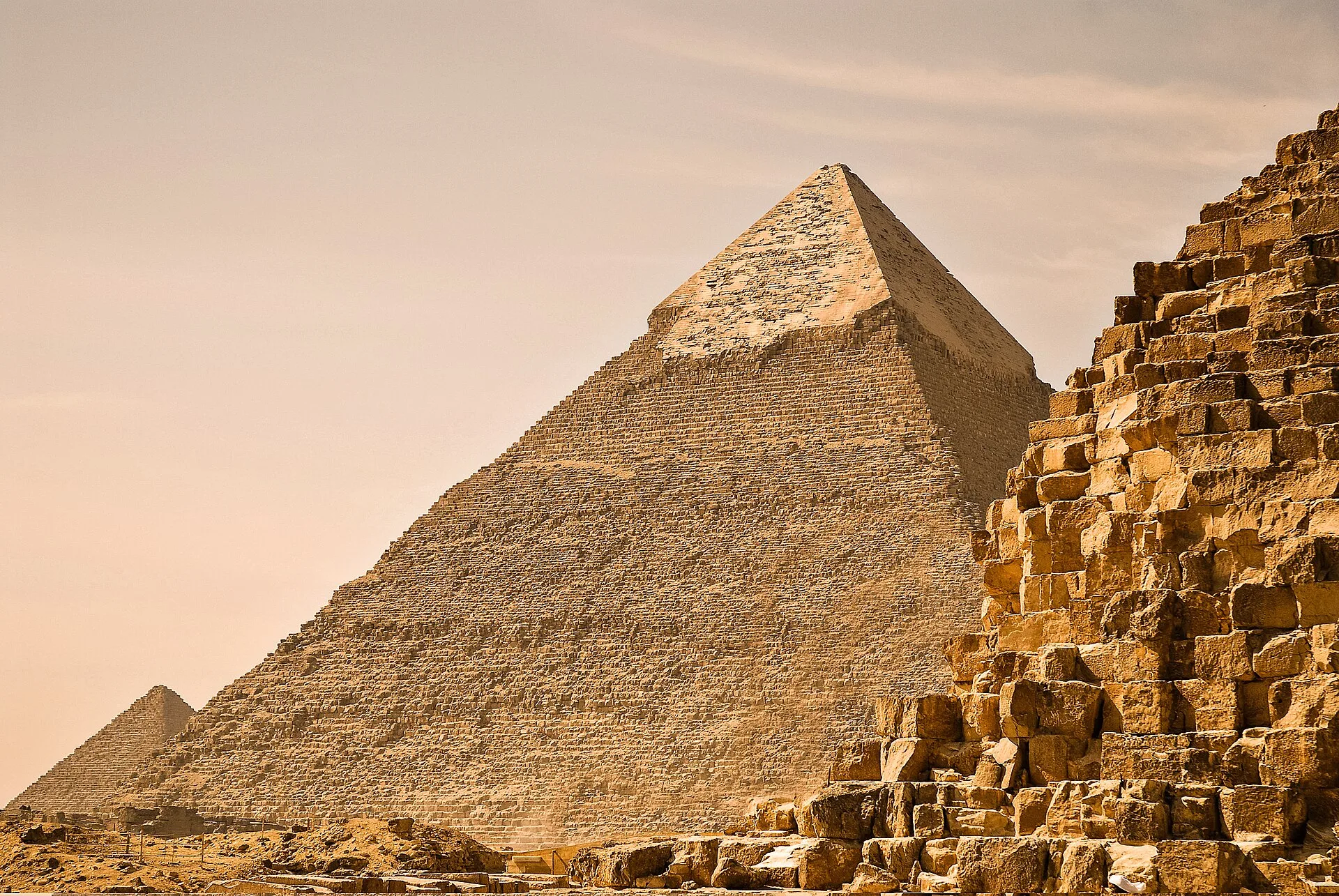
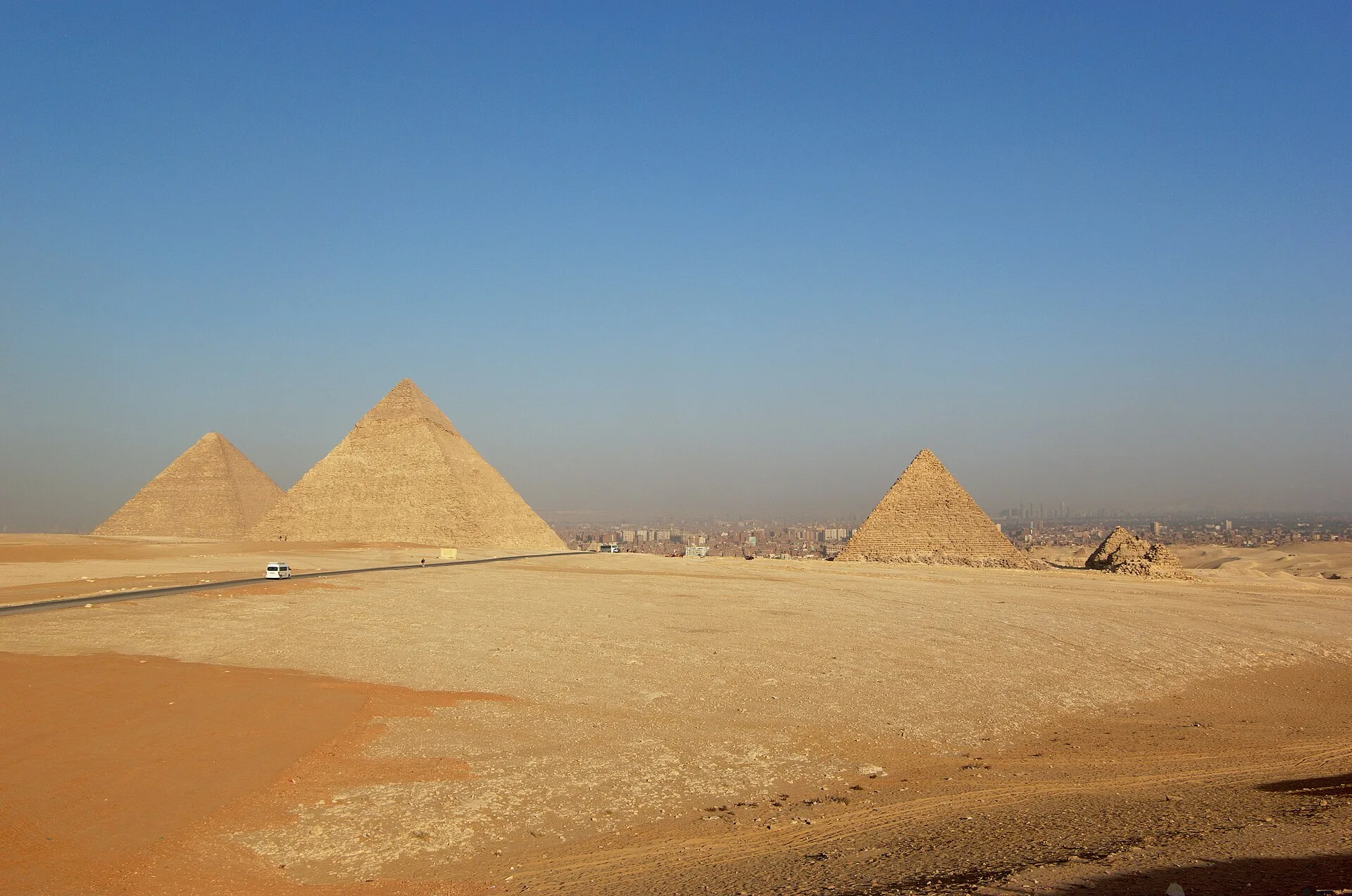
The Pyramid of Khufu, the largest, stands at the top of the plateau and is the one most visitors photograph first. The Pyramid of Khafre, slightly smaller but sitting on higher ground, still carries a cap of its original smooth casing stone near the summit. The Pyramid of Menkaure, the smallest of the three, completes the group. Walking the full length of the plateau from Khufu to Menkaure takes about 30 to 45 minutes at an easy pace, with stops for photographs.
The Great Sphinx
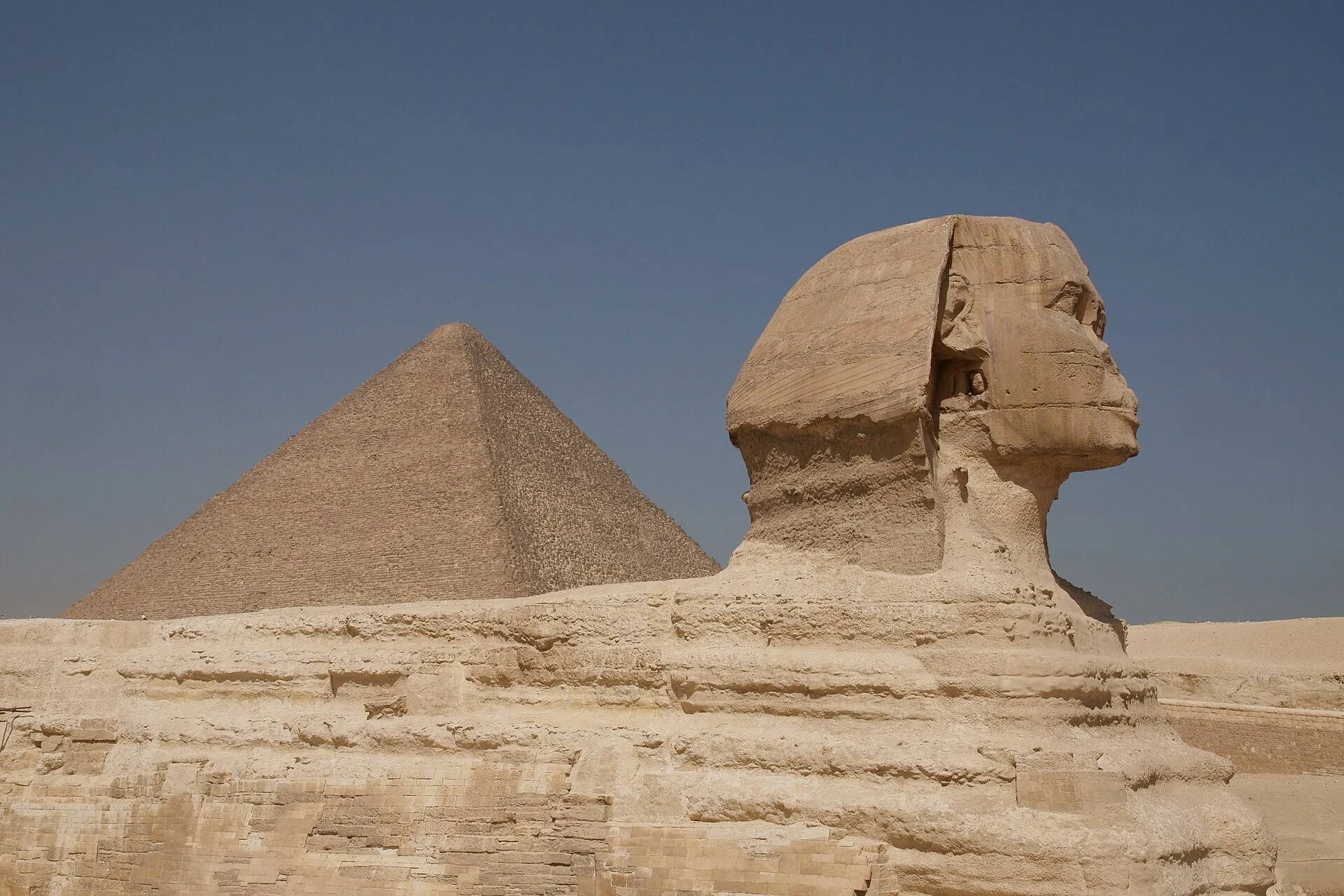
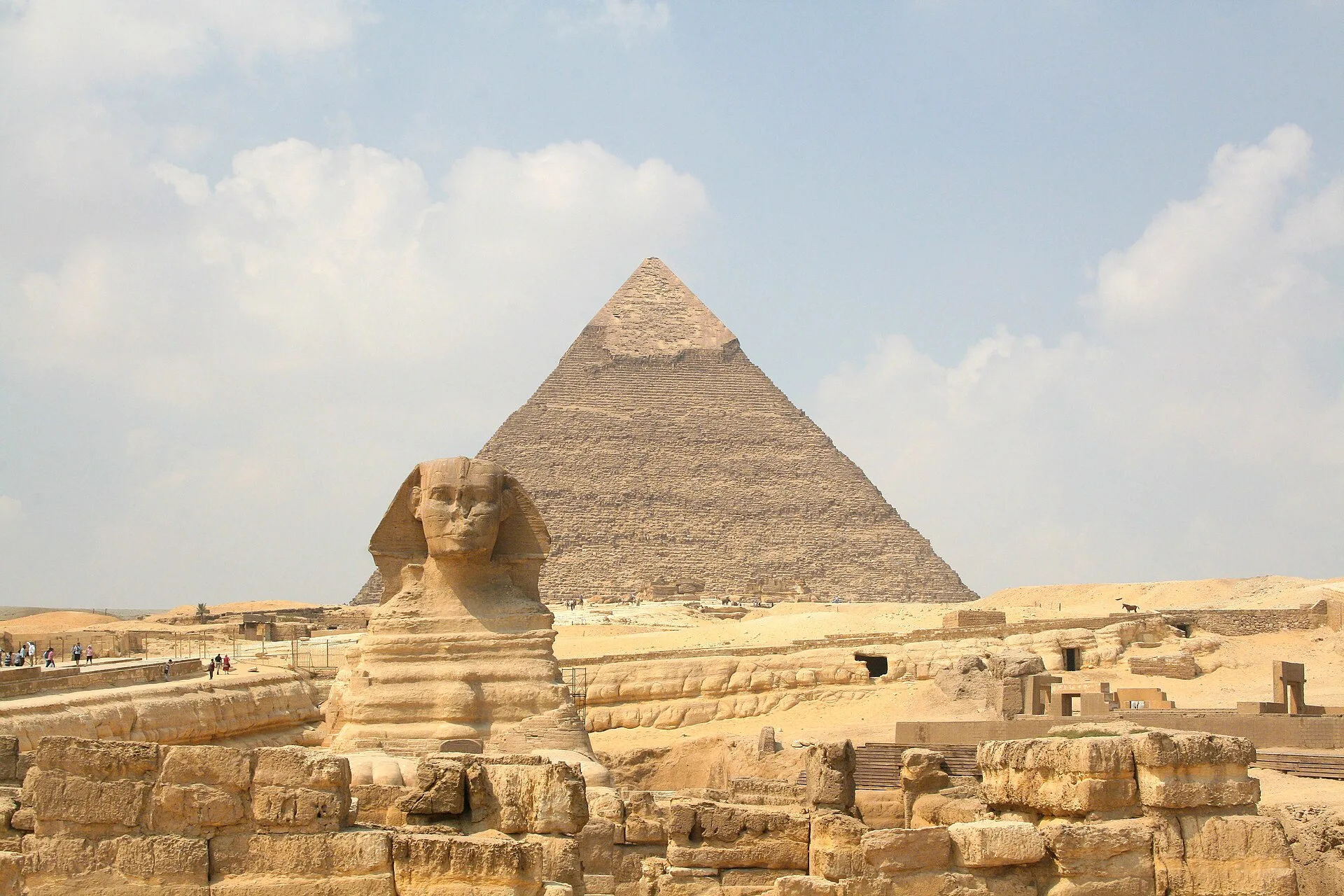
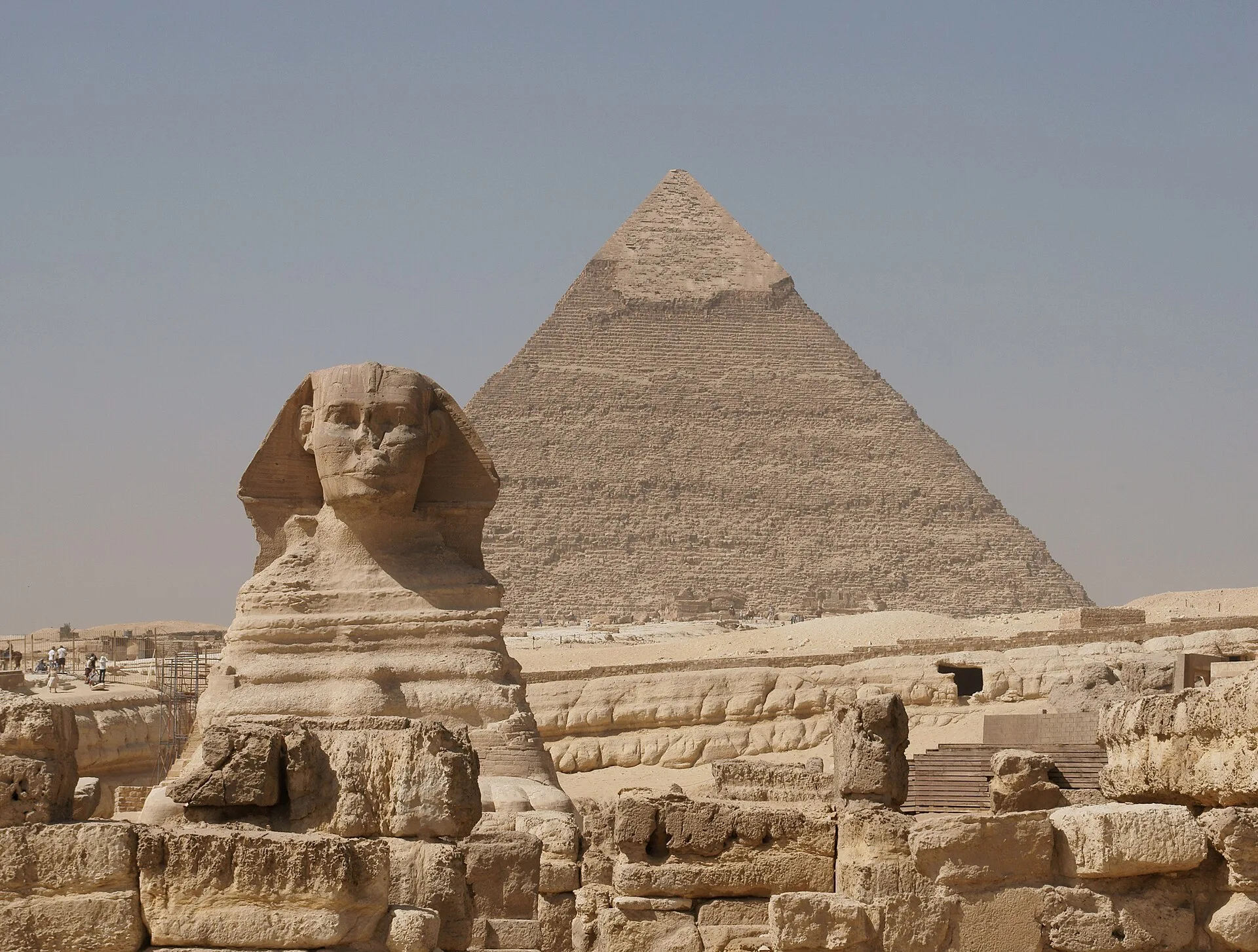
The Sphinx sits lower on the plateau, facing east, a short walk or drive down from the pyramids. Most visitors spend 20 to 30 minutes here, enough time to see it from the main viewing terrace and from the valley temple beside it. It pairs naturally with the pyramids behind it in the same visit, and the classic photograph, the Sphinx with the Pyramid of Khafre rising behind it, is taken from this lower terrace.
Khufu's boat, now at the Grand Egyptian Museum
The full-size funerary boat found beside the Great Pyramid in 1954 has been moved to the Grand Egyptian Museum, where it has a gallery of its own. The old boat museum on the plateau is closed, so plan to see the boat with the museum rather than with the pyramids.
The Grand Egyptian Museum
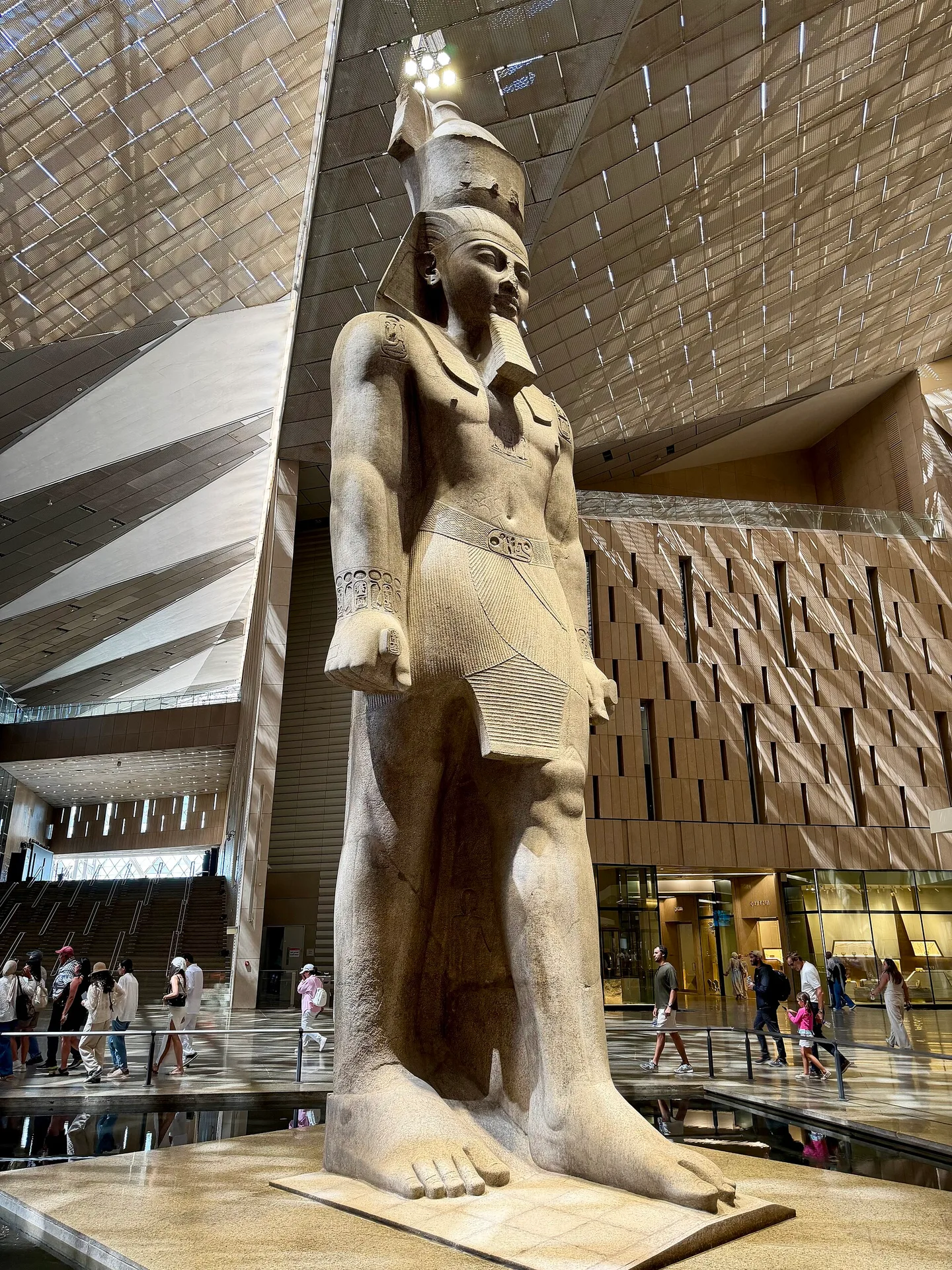
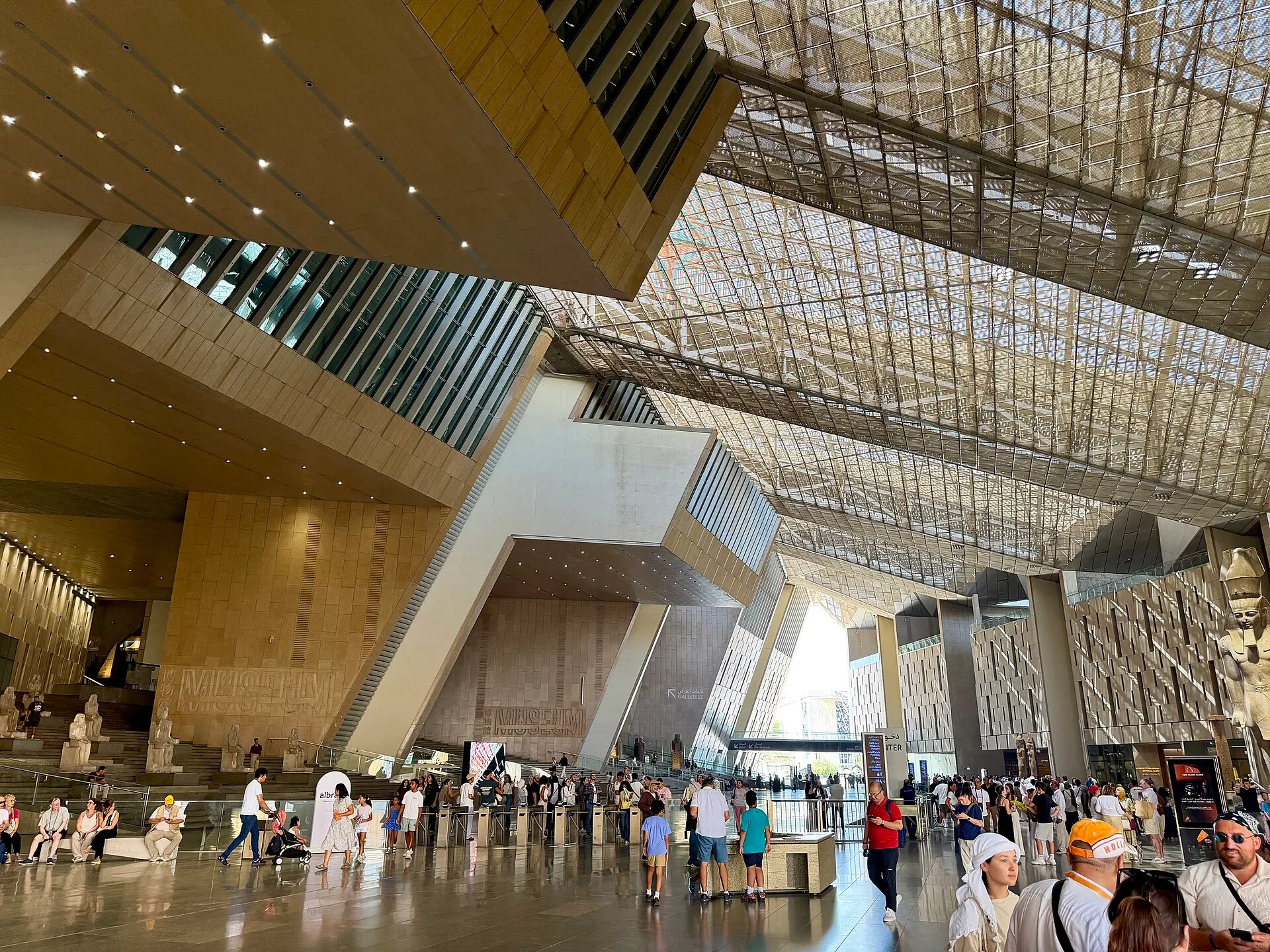
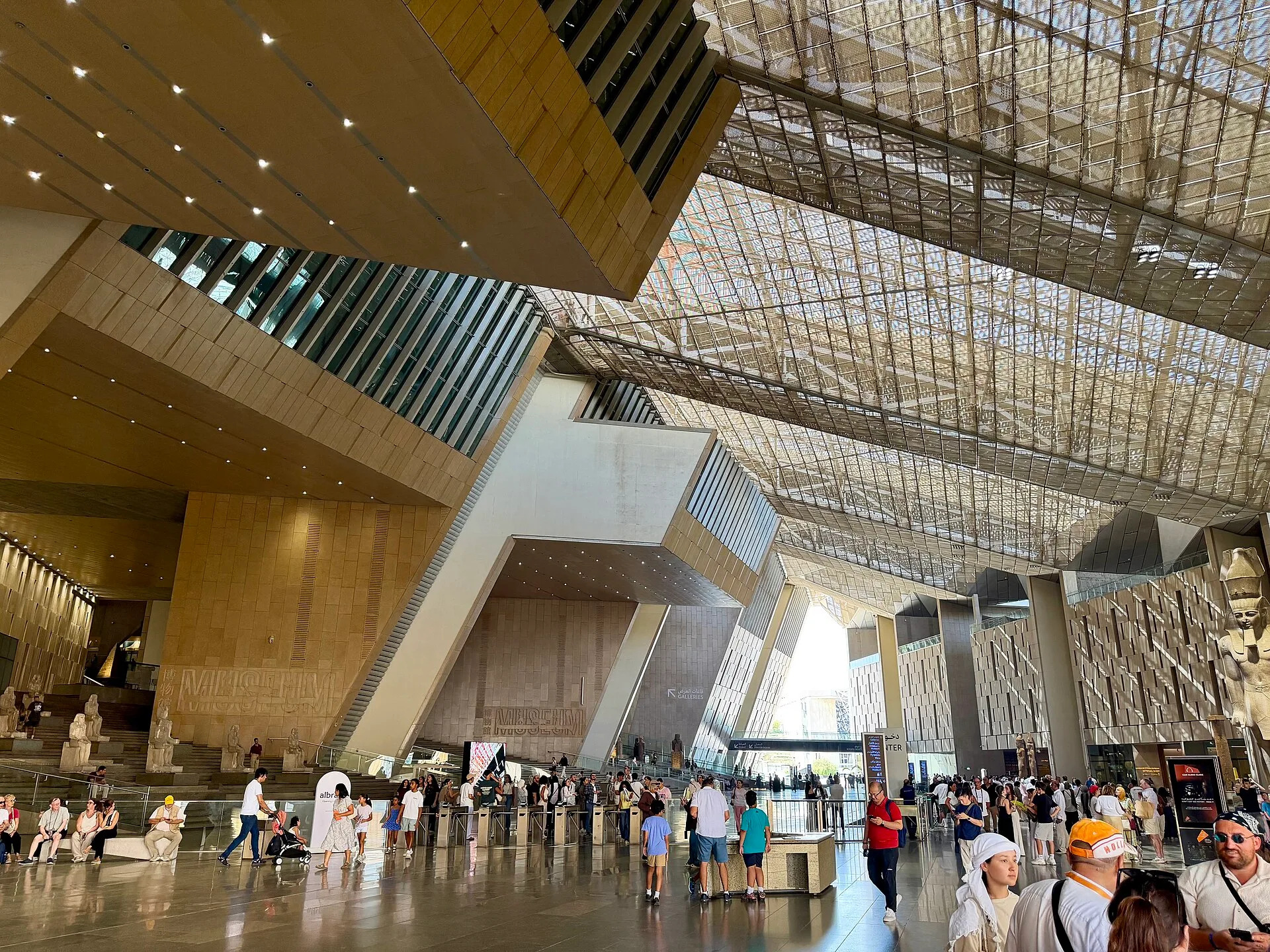
The Grand Egyptian Museum sits close to the plateau, on the Cairo-Alexandria Desert Road, and holds the full Tutankhamun collection along with thousands of other objects drawn from across ancient Egypt. Its Grand Hall atrium alone is worth time to take in. This is not a quick stop: a proper visit needs a minimum of three to four hours, and travellers who want to see the Tutankhamun galleries without rushing often give it half a day on its own.
How many days to give Giza
One full day covers the pyramids and the Sphinx at a comfortable pace, with time for a camel or horse ride along the edge of the plateau if you want one. That day does not comfortably stretch to include the Grand Egyptian Museum as well, not if you want to see either properly.
The honest answer to how many days in Giza is one full day for the plateau, plus a half day or a second day for the museum. Travellers short on time sometimes combine a morning at the pyramids with an afternoon at the museum, which is possible but leaves both feeling rushed. Where the schedule allows it, splitting them across two mornings, when the light and the temperature are both easier, gets more out of each site.
Many visitors also use a Giza base to add Saqqara, the step pyramid site a short drive further south, which pairs naturally with a second day on the west bank of Cairo.
Best time to visit Giza
The cooler months, October to April, are the easiest time to be out on an open desert plateau with no shade. Mornings in this period are comfortable for walking between the pyramids and the Sphinx, and the light in the first hour or two after opening is softer for photographs. The summer months bring high daytime heat, which makes an early start even more worthwhile. For a broader look at weather patterns across the country and how they affect a full Egypt itinerary, our season-by-season guide to the best time to visit Egypt sets out what to expect month by month.
Whatever the season, arriving at opening time is the single best piece of advice for Giza. The site is noticeably quieter in the first hour, the heat has not built up yet, and you will have cleaner sightlines for photographs before coach groups arrive later in the morning.
Getting there and getting around
Giza sits on the western side of Greater Cairo, roughly 18 to 25 km from central Cairo depending on where you start, a drive of 30 to 45 minutes outside peak traffic. Taxis and ride-hailing apps such as Uber and Careem both reach the plateau without difficulty, so getting there independently is straightforward. The one exception is the Cairo metro, which does not run out to the plateau itself.
Once inside the site, distances between the pyramids and the Sphinx are short enough to walk, though many visitors prefer a horse, camel or a short internal transfer between the upper plateau and the Sphinx, particularly in warmer months. A private guide and vehicle removes the need to work out logistics on the day, which is one reason most of our own Giza itineraries run with a dedicated Egyptologist and driver throughout.
Where to stay in Giza
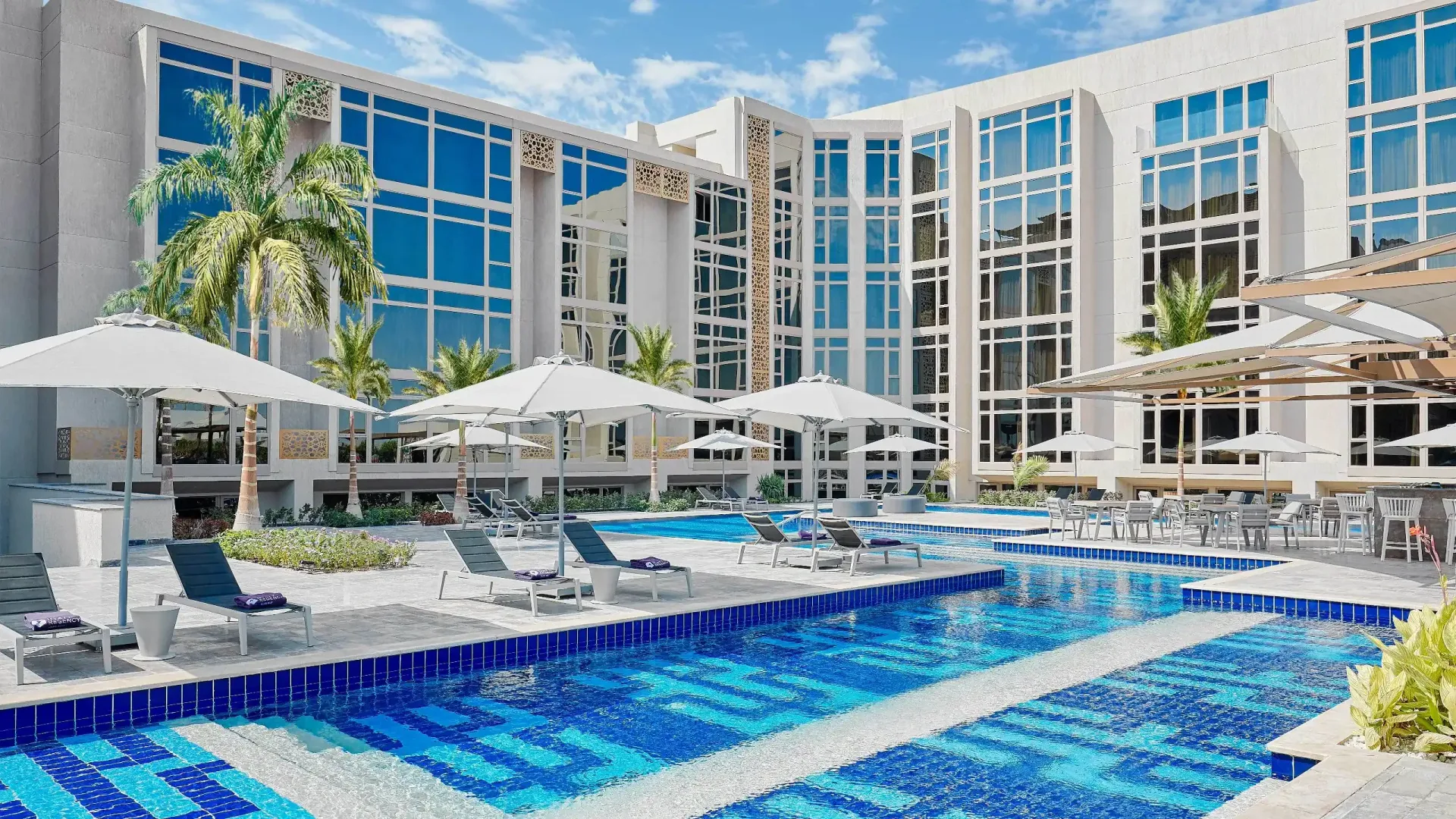
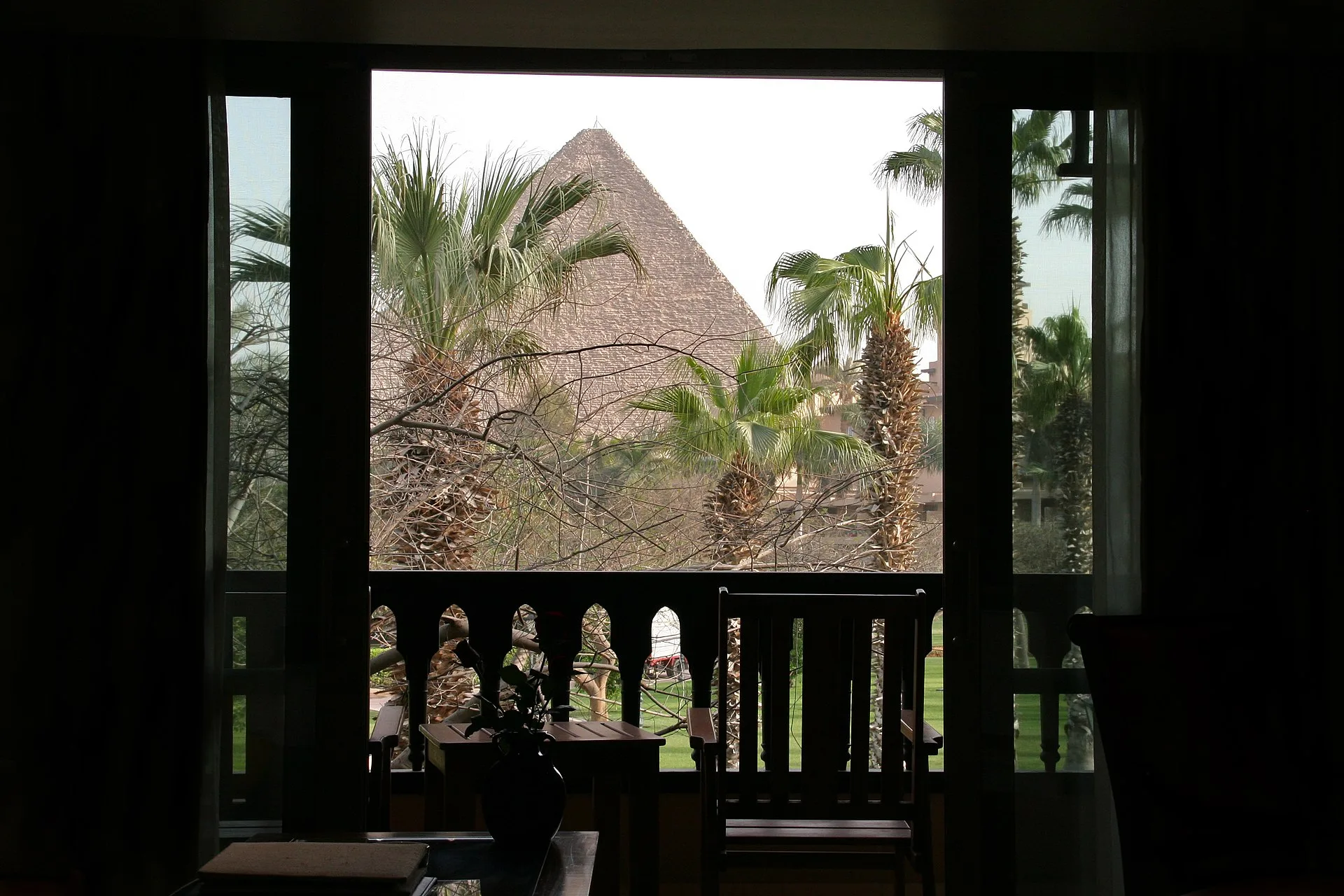
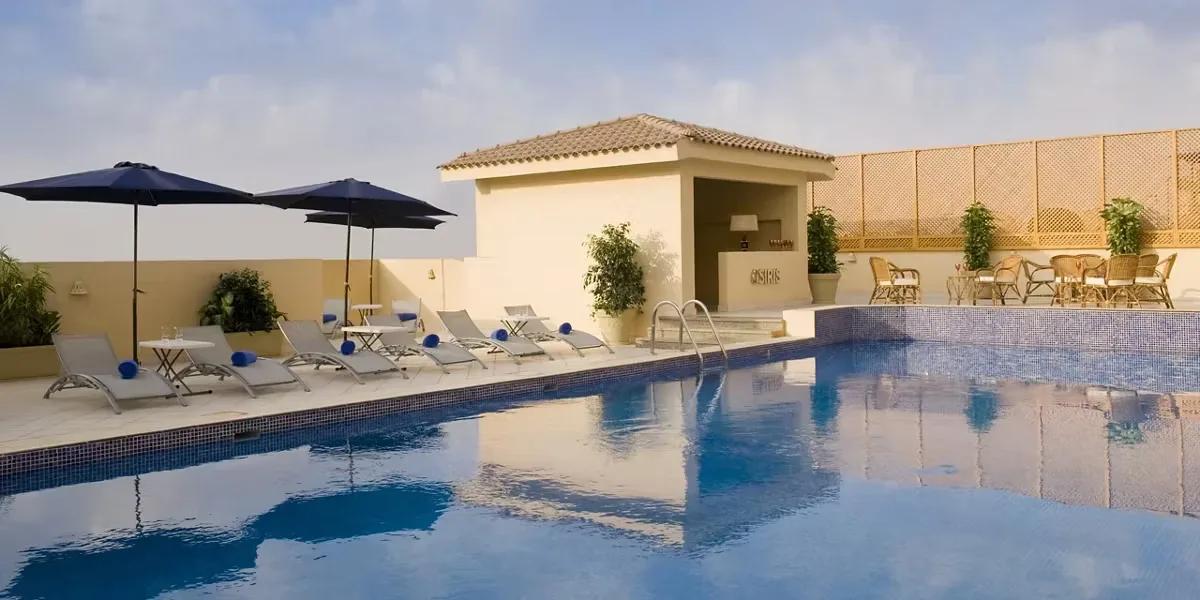
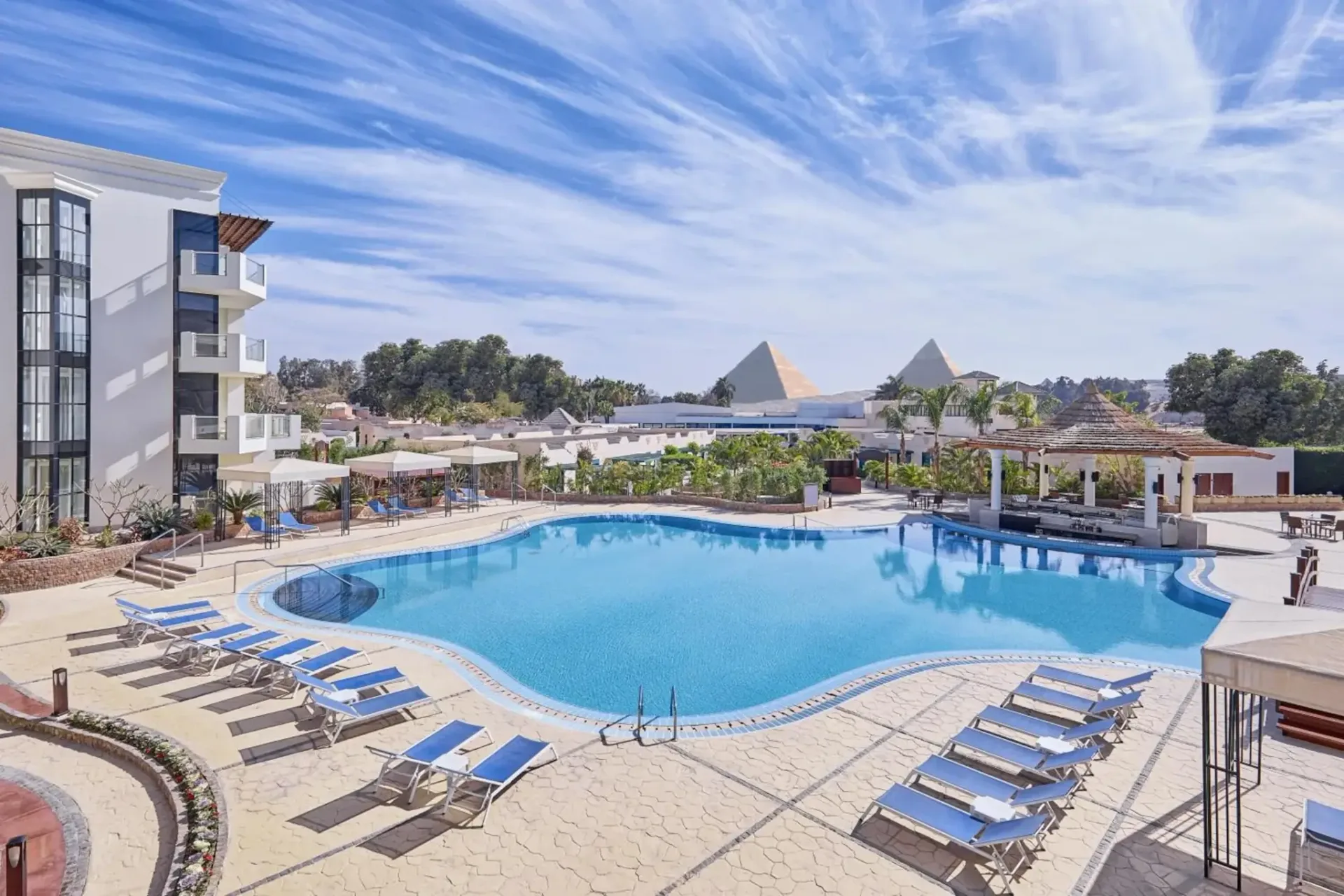
Staying close to the plateau has one clear advantage: you can be at the pyramids right at opening, before the day's heat and crowds build. Marriott Mena House, Cairo began life in 1869 as a royal hunting lodge at the foot of the Giza plateau and remains the closest hotel to the Great Pyramid, with pyramid views from many rooms. Steigenberger Pyramids Cairo sits on the Cairo-Alexandria Desert Road, a short drive from the Grand Egyptian Museum, a useful base if the museum is a priority. Barceló Cairo Pyramids is a tower on Al Haram Street, the avenue that runs from central Giza up to the plateau, putting you close to both the pyramids and the wider city. A short drive further out, Hyatt Regency Cairo West sits inside the gated Pyramids Heights Business Park on the Cairo-Alexandria Desert Road, a good option if you want more distance from the crowds while staying on the Giza side of the city.
Travellers who prefer a downtown Cairo base and a short daily transfer out to Giza can read more about the wider city in our Cairo destination guide, which covers hotels nearer the Nile and Tahrir Square.
Programmes that include Giza
Most of our Cairo and Egypt itineraries include the pyramids and the Grand Egyptian Museum, but the pacing differs. Discover Cairo Like Never Before gives Giza proper room across four days with a private guide, alongside the Grand Egyptian Museum, the royal mummies and Old Cairo. Pyramids and Nile Escape Program opens with three nights in Cairo built around the plateau and the museum before flying on to the Nile, following Egypt's classic route without long road or rail transfers. Travellers working to a tighter budget can look at the Pyramids and Nile Escape Budget Program, which covers the same highlights with an overnight sleeper train south. At Panda Travel Egypt we build each of these around a licensed Egyptologist guide, so the order of the plateau, the Sphinx and the museum is handled for you rather than worked out on the day.
For a wider look at how many days a full Egypt trip needs once Giza, the Nile and the Red Sea are all in the mix, our guide to how many days to spend in Egypt sets out itineraries from four days up to ten. A good next step, once you know how many days you have, is to browse the full range of Egypt tour packages and match one to your dates.